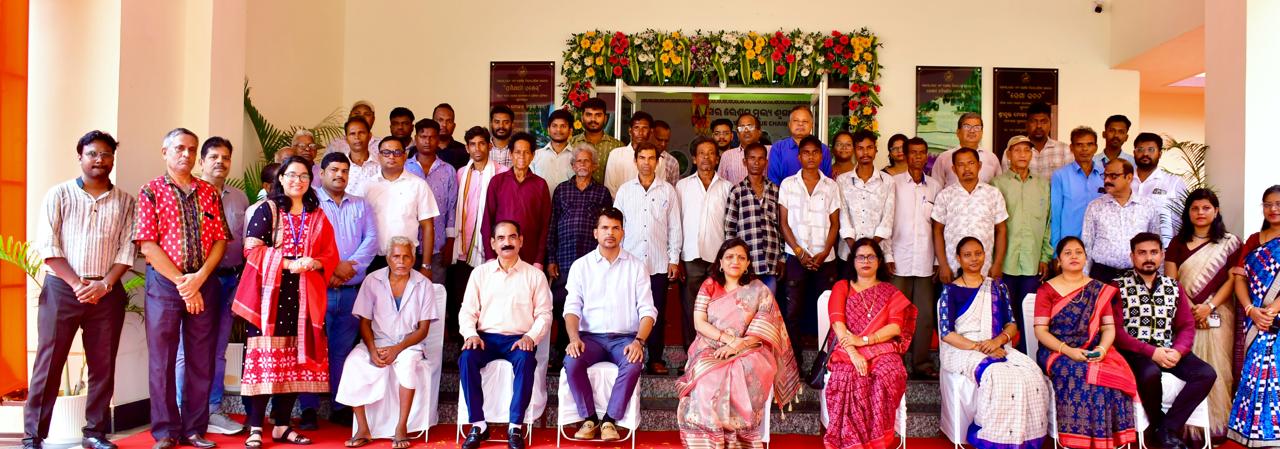
Bhubaneswar: Odisha has intensified its efforts to strengthen the sericulture sector with the launch of the first Farmers’ Training Programme on “Tasar Host Plant Nursery and Its Management” at the Odisha State Sericulture Research and Training Institute (OSSR&TI), marking a new phase in capacity building and sustainable livelihood promotion for silk growers.
The training programme, being conducted from June 19 to 23, is the first major activity at Resha Bhavan, the institute’s newly established training centre inaugurated earlier this year during the Toshali National Crafts Mela in Bhubaneswar.
Inaugurating the programme, Commissioner-cum-Secretary of the Handlooms, Textiles and Handicrafts Department, Guha Poonam Tapas Kumar, said sericulture continues to serve as an important source of year-round income generation and livelihood security for rural and tribal households across Odisha.
She informed that nearly one lakh people from around 15,000 traditional families are directly associated with sericulture activities in the state. Referring to India’s four silk varieties—Mulberry, Tasar, Eri and Muga—she highlighted their distinct production systems and their contribution to strengthening the rural economy.
Tasar cultivation remains one of Odisha’s most established sericulture activities and is widely practiced in tribal-dominated regions. More than 46,800 Scheduled Tribe and Scheduled Caste families across 14 districts are engaged in Tasar production, generating annual income of around ₹6 crore through cocoon production with comparatively low investment requirements.
The programme also highlighted growth opportunities in other silk segments. Eri cultivation is currently undertaken across multiple districts and supports nearly 2,000 farmers through production spread over approximately 1,000 acres. Mulberry sericulture, practiced across 12 districts, continues to provide supplementary income opportunities to tribal and rural farming communities.
Addressing participants, the Commissioner-cum-Secretary outlined the government’s ongoing initiatives to strengthen the sector through infrastructure and welfare support. Measures under consideration include establishment of serisheds for cocoon rearing, insurance coverage for farmers, training and hostel facilities for women sericulturists and revival of the spinning unit at Bhagamunda in Keonjhar.
She credited farmers for Odisha securing the top position in the sericulture review conducted by the Central Silk Board and emphasised the importance of continued adoption of improved practices and technology.
Director of Textiles and Handlooms Somesh Kumar Upadhyay announced that the state government intends to invest ₹274 crore over the next five years under the Chief Minister’s Sericulture Development Scheme to accelerate growth across all four silk varieties.
As part of the knowledge-building initiative, 11 training programmes are planned over the coming year to provide mother tongue-based training to 165 beneficiaries and improve skill development in sericulture practices.
The event also featured an exhibition and audio-visual showcase of initiatives including Karuna Silk, Amlan Karuna Silk Showroom in Puri and the Tasar Silk Park at Keonjhar. Participants explored technologies such as the Buniyad Reeling Machine and Motorised Spinning Machine, while dignitaries also joined a plantation drive under the Ek Ped Maa Ke Naam campaign.
The programme concluded with participation from representatives of Primary Sericulture Cooperative Societies, district officials and stakeholders from across Odisha’s sericulture ecosystem.