
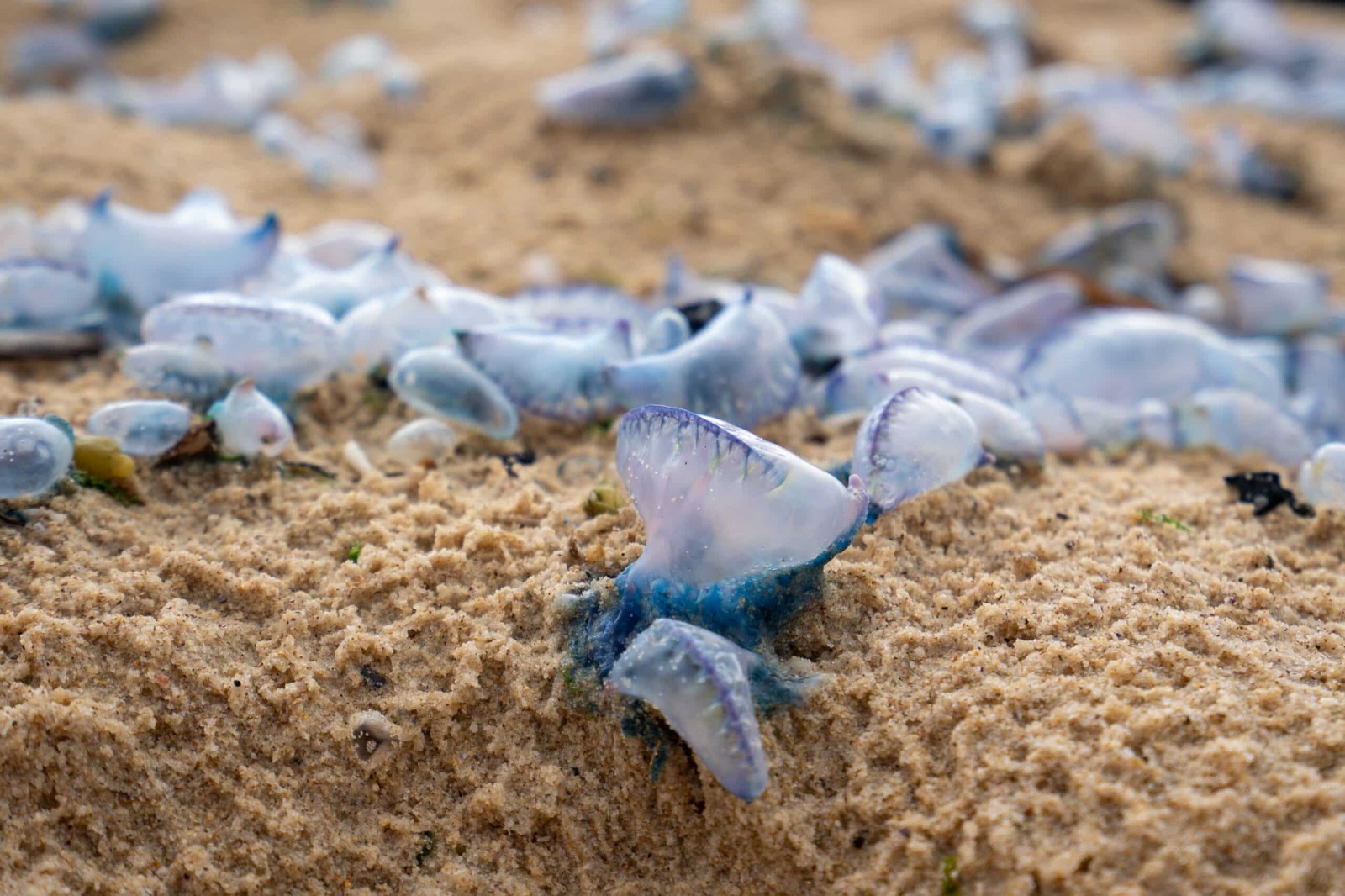
Puri: The scenic Chandrabhaga sea beach near the Ramachandi estuary turned into a cause of concern on Monday as thousands of rare Blue Button jellyfish were found washed ashore dead. The unusual sight drew locals and tourists, even as experts voiced alarm over the possible ecological implications.
Marine scientists suggest that rising sea surface temperatures, linked to climate change and pollution, may have triggered the mass mortality. Warmer waters often disturb fragile ocean ecosystems, making delicate species such as the Blue Button jellyfish particularly vulnerable.
Despite their tiny size, these jellyfish play an essential role in the marine food chain. They are a key source of food for Olive Ridley turtles and whales, and any imbalance—whether from falling turtle numbers or changing environmental conditions—can disrupt this cycle, leading to mass stranding events.
Doctors have also warned that human contact with the dead jellyfish could cause rashes and skin infections, urging visitors to exercise caution while at the beach.
Incidents of Blue Button jellyfish stranding have been reported from Chandrabhaga in previous years as well. Experts say the recurrence highlights the urgent need to address rising sea temperatures and reduce marine pollution before such episodes become more frequent.