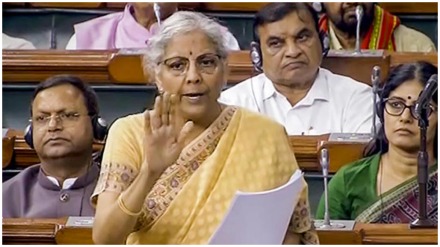
New Delhi: In a landmark move to modernise India’s tax regime, the Lok Sabha has approved the Income-Tax (No. 2) Bill, 2025, which will replace the six-decade-old Income-tax Act of 1961 from April 1, 2026. The legislation, passed with broad consensus, promises a simpler, clearer, and more efficient tax framework aligned with present-day economic realities.
The new law incorporates most of the recommendations made by a Parliamentary Select Committee headed by Kendrapada MP Baijayant Panda. The government withdrew its earlier draft and tabled a fresh version to reflect these inputs, ensuring the bill is more taxpayer-friendly and better suited for self-compliance.
Officials said the measure is part of a wider effort to eliminate outdated provisions, cut red tape, and reduce legal disputes. Notably, the bill retains existing tax slabs, capital gains rules, and income categories, signalling continuity alongside reform.
Highlights of the New Income Tax Act
Simplified Structure: Cuts the number of sections and halves the text length, built around “SIMPLE” principles — Streamlined, Integrated and Concise, Minimized Litigation, Practical and Transparent, Learn and Adapt, and Efficient.
Lower Litigation Risk: Introduces a “trust first, scrutinise later” model, provides for “Nil” TDS certificates, and allows discretionary waivers for unintentional errors.
Property Income Clarity: Removes notional rent tax on vacant properties, extends pre-construction interest deduction to let-out properties, and applies the 30% standard deduction after municipal tax payment.
Pension Benefits: Grants explicit deductions for commuted pensions and gratuity for eligible family members and certain non-employee pensioners.
Business & Corporate Relief: Removes Alternate Minimum Tax (AMT) for specific LLPs, eases rules for charitable trusts, and clarifies corporate definitions.
Digital Compliance Tools: Expands search powers to include “virtual digital space” and adds virtual digital assets under undisclosed income.
Faster Refunds: Enables refunds for delayed ITR filings by small taxpayers and allows late TDS refund claims.
The finance ministry expects the law to broaden the tax base, encourage voluntary compliance, and enhance revenue collection. With its passage in the Lok Sabha, the bill now awaits Rajya Sabha approval before becoming law.
Bhubaneswar: Runners and fitness enthusiasts gathered in Bhubaneswar on Sunday for a promotional run ahead…
Bhubaneswar: Odisha has launched a dedicated digital portal to promote the state as a destination…
Bhubaneswar: A coordinated effort involving multiple government departments will be undertaken in the Bhubaneswar Sub-Division…
Debrigarh: Debrigarh Wildlife Sanctuary is set to offer visitors a wider range of nature-based experiences…
Bhubaneswar: The Odisha Electric Vehicle Policy, 2021, will remain in force until December 31, 2026,…
Bhubaneswar: Odisha aims to expand the cultivation of healthier and nutrient-rich rice varieties from the…