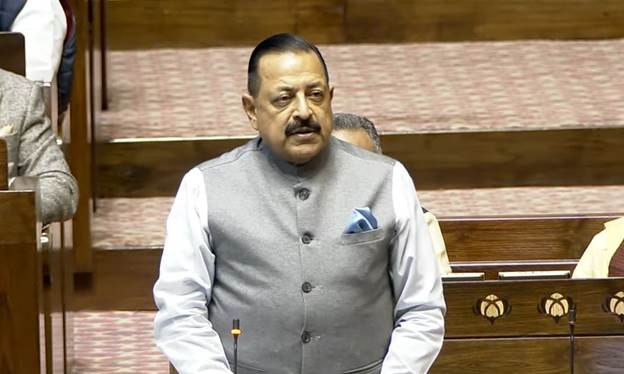
New Delhi: Union Minister of State for Science and Technology, Earth Sciences, and PMO, Dr. Jitendra Singh, assured the Rajya Sabha today that India’s nuclear power plants adhere to the highest safety standards globally, guided by rigorous protocols and international oversight. Addressing concerns during Question Hour, the Minister reaffirmed India’s commitment to nuclear safety as a cornerstone of its energy policy.
Dr. Jitendra Singh emphasized the Department of Atomic Energy’s safety-first approach, explaining that every stage, from site selection to operation, is governed by stringent measures. Comprehensive inspections, including quarterly reviews during construction and biannual operational checks, are supplemented by a mandatory five-year license renewal process.
India’s safety protocols are further strengthened by reviews from global organizations like the World Association of Nuclear Operators (WANO). The country’s nuclear plants consistently operate below the critical safety benchmark for radiation emissions, set at 1,000 microsieverts globally. For instance, the Kudankulam plant has reduced emissions from 0.081 microsieverts a decade ago to an impressively low 0.002 microsieverts today.
Highlighting the disaster-resilient design of India’s nuclear facilities, Dr. Jitendra Singh noted that plants are constructed above the highest recorded flood and sea levels. Strategic placements ensure that eastern coast facilities are over 1,300 kilometers from tsunami-prone zones in Indonesia, while western coast plants like Tarapur are located over 900 kilometers from risk zones in Pakistan.
India’s nuclear advancements include the Kaiga Generating Station’s world record of 962 days of continuous operation and the successful 50-year run of the Tarapur plant, the nation’s first nuclear power facility. The operationalization of India’s first indigenous Pressurized Heavy Water Reactor (PHWR) in Kakrapar, Gujarat, and the full functionality of the Kudankulam plant underscore the nation’s self-reliance and leadership in nuclear technology.
Dr. Jitendra Singh highlighted nuclear technology’s impact beyond energy generation, including radiation-resistant crops, food preservation, advanced cancer treatments, and protective gear for law enforcement. These applications align with Homi Bhabha’s vision of harnessing atomic energy for peaceful purposes.
On the Civil Liability for Nuclear Damage Act, 2010, the Minister explained that the framework balances public interest and investment viability, with operators bearing primary responsibility and provisions for supplier accountability in specific cases.
New Delhi: President Droupadi Murmu on Wednesday attended the award ceremony of the 65th National…
New Delhi: Union Agriculture and Farmers’ Welfare Minister Shivraj Singh Chouhan has called for developing…
Bhubaneswar: Odisha Chief Secretary Anu Garg has called for expanding livelihood opportunities for rural families…
Bhubaneswar: Odisha Chief Secretary Anu Garg has directed all concerned departments and District Collectors to…
Bhubaneswar: Higher secondary schools across Odisha must install CCTV cameras in examination halls and other…
Cuttack: Remembering police personnel who made the ultimate sacrifice in the service of the nation,…