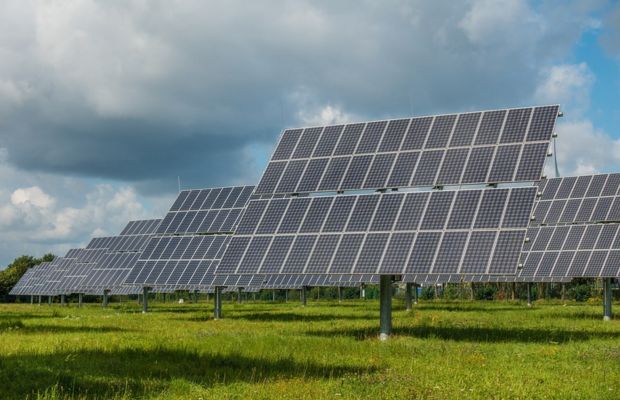
New Delhi: In a historic achievement, India has surpassed 100 GW of installed solar power capacity, reaffirming its position as a global leader in renewable energy. This milestone marks a significant step toward achieving Prime Minister Narendra Modi’s vision of 500 GW of non-fossil fuel-based energy capacity by 2030, showcasing the country’s commitment to a cleaner and greener future.
Union Minister of New and Renewable Energy, Pralhad Joshi, hailed this accomplishment, stating that India’s energy transition over the past decade has been nothing short of revolutionary. He credited initiatives such as solar parks, rooftop solar projects, and widespread solar panel installations for the transformation.
“Under the leadership of Prime Minister Narendra Modi, India’s renewable energy journey has been inspiring. Today, we have successfully reached 100 GW of solar energy production. India is not only becoming self-reliant in green energy but is also showing the world a new path,” Joshi said.
The Minister also emphasized that the PM SuryaGhar Muft Bijli Yojana is playing a crucial role in making rooftop solar accessible to households across India, empowering citizens with clean and sustainable energy solutions.
Unprecedented Growth in India’s Solar Sector
India’s solar power sector has seen exponential growth of 3,450% over the past decade, increasing from 2.82 GW in 2014 to 100 GW in 2025. As of January 31, 2025, India’s total installed solar capacity stands at 100.33 GW, with an additional 84.10 GW under implementation and 47.49 GW under tendering.
The solar and hybrid energy projects are advancing rapidly, with 64.67 GW under implementation and tendered, bringing the grand total of solar and hybrid projects to 296.59 GW.
Solar power now accounts for 47% of India’s total installed renewable energy capacity. The year 2024 witnessed record-breaking growth, with 24.5 GW of solar capacity added, more than doubling the installations of 2023. The utility-scale solar segment alone contributed 18.5 GW, marking a 2.8 times increase compared to the previous year.
Among the top-performing states in utility-scale solar installations are Rajasthan, Gujarat, Tamil Nadu, Maharashtra, and Madhya Pradesh, which have significantly contributed to the nation’s solar expansion.
Boom in Rooftop Solar Adoption
The rooftop solar sector has also witnessed impressive growth, with 4.59 GW of new capacity installed in 2024, reflecting a 53% increase from 2023. A major contributor to this surge has been the PM Surya Ghar: Muft Bijli Yojana, which has led to nearly 9 lakh rooftop solar installations nationwide, helping millions of households transition to clean energy.
India’s Rise as a Global Solar Manufacturing Hub
India has also emerged as a key player in solar manufacturing. In 2014, the country had a modest solar module production capacity of just 2 GW. Over the past decade, this has surged to 60 GW in 2024, with India on track to achieve 100 GW of solar module production capacity by 2030.
A Renewable Energy Powerhouse
Under the leadership of Union Minister Pralhad Joshi, the Ministry of New and Renewable Energy (MNRE) has been implementing strategic initiatives to scale up India’s renewable energy footprint.
This 100 GW milestone in solar power capacity not only ensures clean, sustainable, and affordable energy access for millions but also cements India’s position as a renewable energy powerhouse. With a strong focus on self-reliance and global leadership in green energy, the country is well on its way to meeting its 500 GW non-fossil fuel energy target by 2030 and driving the transition toward a sustainable future.