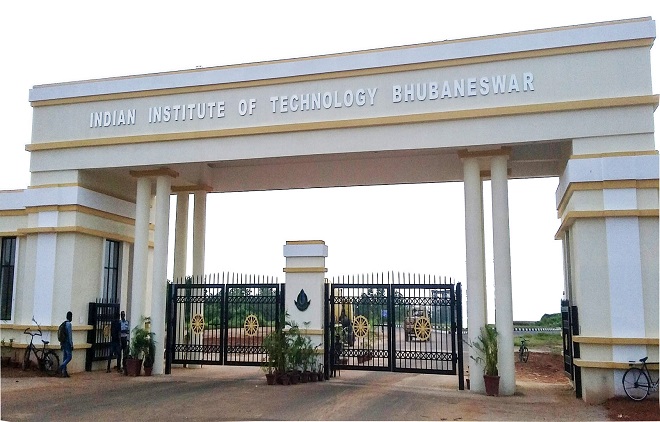
International Conference on Inclusive Higher Education Hosted by IIT Bhubaneswar
Bhubaneswar: As India looks to secure critical mineral resources for the future, IIT Bhubaneswar has emerged at the forefront of innovation with a satellite-based technology that can accurately identify potential bauxite deposits in Odisha, earning the institute national recognition at a major mining and infrastructure forum.
The award was presented during the 4th Odisha Mining and Infrastructure International Conference 2026 to Dr. Ashim Sattar, Assistant Professor, IIT Bhubaneswar, for his pioneering research on hyperspectral satellite applications in bauxite exploration. The study, published in the Journal of Geochemical Exploration, was lauded for bridging advanced science with real-world mining challenges. The conference saw participation from Industries and Skill Development Minister Sampad Swain.
Using hyperspectral remote sensing data, the research mapped probable bauxite zones in Koraput and Rayagada districts, areas known for rich mineral potential but difficult terrain. The satellite analysis was strengthened through field verification, geochemical sampling, petrographic studies, and laboratory-based spectral analysis, ensuring scientific robustness.
Officials from IIT Bhubaneswar said the methodology offers a reliable first-stage exploration tool, helping reduce excessive drilling and ground surveys. This is particularly significant in ecologically sensitive regions of the Eastern Ghats, where conventional methods often involve high costs and environmental risks.
The study marks Odisha’s first large-scale application of satellite-based bauxite prospecting, a critical development as aluminium—derived from bauxite—continues to see rising demand across industries including construction, transportation, and aerospace. Experts have warned of a potential global aluminium shortfall by 2030, underscoring the importance of strengthening domestic mineral mapping.
Odisha alone accounts for over 50 per cent of India’s bauxite reserves, estimated at around 2.3 billion tonnes. However, accessibility challenges have limited systematic exploration in several mineral-bearing belts, making technology-driven approaches increasingly essential.
The satellite-based technique analyses spectral signatures, which indicate how surface materials interact with electromagnetic radiation, enabling researchers to pinpoint bauxite-rich formations with greater precision.
Describing the impact of the research, IIT Bhubaneswar said the technology could play a key role in promoting sustainable mining, enabling better planning, minimising ecological disturbance, and supporting evidence-based policymaking. The institute added that the findings open new possibilities for advanced mineral mapping across India’s resource-rich regions.
Bhubaneswar: Odisha has rolled out a week-long statewide capacity-building initiative, “SĀDHANA Saptah – 2026,” aimed…
Bhubaneswar: In a major push to enhance early childhood care infrastructure, Odisha inaugurated 1,889 newly…
Bhubaneswar: In a major step towards improving international travel access for residents of Odisha, Chief…
Bhubaneswar: In a move aimed at strengthening the foundation of sustainable urban growth, the Housing…
Bhubaneswar: Odisha has taken a significant lead in India’s clean energy transition by becoming the…
Bhubaneswar: In a major step towards planned urban expansion, the Bhubaneswar Development Authority on Tuesday…