Groundbreaking Discovery in Magnetoelectric Materials Offers Potential for Energy-Efficient Data Storage
New Delhi: In a significant breakthrough, researchers led by Professor A. Sundaresan, Chair of the Chemistry & Physics of Materials Unit at Jawaharlal Nehru Centre for Advanced Scientific Research (JNCASR), an autonomous institution under the Department of Science & Technology (DST), Govt. of India, have identified a unique mechanism of electric polarization through magnetic ordering in a newly discovered mineral, “MnBi2S4”. The findings, published in the journal PHYSICAL REVIEW B, could have implications for energy-efficient data storage.
The mineral, also known as graţianite, belongs to the manganese chalcogenide family and exhibits a distinctive mechanism of inducing electric polarization through magnetic ordering. Unlike materials typically possessing either magnetism or ferroelectricity, “MnBi2S4” showcases both properties simultaneously. This dual characteristic is crucial for advanced technology applications such as spintronics, electronic memory devices, actuators, and switches.
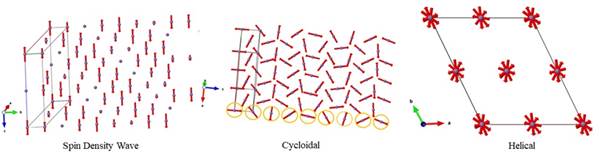
The study focused on “spin-driven multiferroics,” a type of multiferroic material that displays ferroelectricity only under specific magnetic structures. Professor Sundaresan’s team, employing high-resolution neutron diffraction, uncovered magnetic structures, including a spin density wave, cycloidal, and helical spin structures, in “MnBi2S4”. Notably, the latter two spin structures induced ferroelectricity in the material.
The breakthrough lies in the strong coupling between magnetism and electric polarization driven by magnetic frustration. While a previous paper explored the combined effect of polar structure and magnetic structure for magnetoelectric coupling, this study reveals that “MnBi2S4” undergoes magnetic ordering at low temperatures, resulting in cycloidal and helical spin structures that induce ferroelectricity.
The researchers observed that as the temperature decreased, a magnetic transition occurred, leading to cycloidal spin structure and induced polarization at 23 Kelvin. Further cooling to 21.5 Kelvin resulted in a helical structure, also breaking inversion symmetry and inducing polarization.
Professor Sundaresan emphasizes the significance of this finding, stating, “The unique mechanism, driven by magnetic frustration, represents a breakthrough in magnetoelectric coupling.” If the material can exhibit the same phenomena at room temperature, it could revolutionize data storage by enabling energy-efficient manipulation of spin using small electric fields.
The study’s findings offer potential applications in energy-efficient data storage and the development of a four-state logic memory system, providing additional degrees of freedom compared to current binary logic systems. However, further exploration of different materials and structures is necessary to understand the mechanisms inducing polarization at room temperature.
The Sheikh Saqr Laboratory and International Centre for Materials Science at JNCASR provided experimental facilities, with financial support from DST, SERB, and the Government of India. Neutron beam time was provided by the Science and Technology Facility Council (STFC UK).
Bhubaneswar: Odisha has earmarked ₹1,615 crore over five years under its PMAY-Urban BANDHU initiative to…
Bhubaneswar: Integrated transport networks connecting cities with their surrounding regions are essential for improving daily…
Bhubaneswar, October 24: The Odisha Agriculture Department has stepped up preparedness to protect crops and…
Bhubaneswar: Odisha has stepped up its cyclone preparedness, deploying disaster response teams, readying evacuation shelters…
Bhubaneswar: The Odisha Energy Department has stepped up preparations to deal with the possible impact…
Bhubaneswar: In a significant ruling concerning government land near the UNESCO-listed Konark Sun Temple, the…