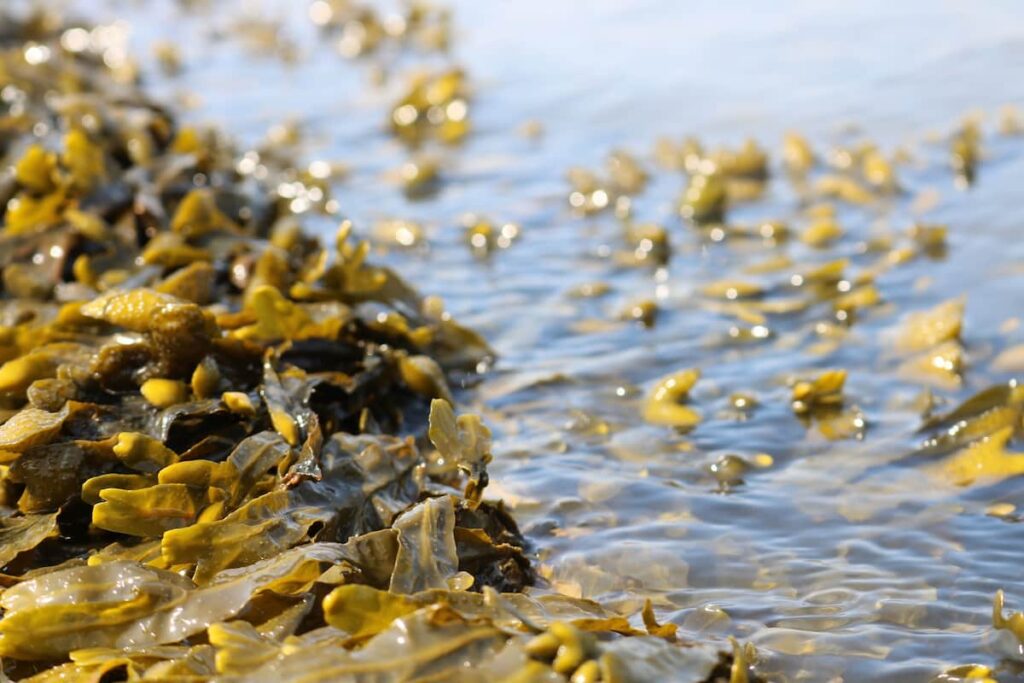
New Delhi: To ensure the availability of high-quality biostimulants to farmers, the Government of India has incorporated biostimulants under the Fertilizer (Control) Order, 1985. Among the eight categories of biostimulants, seaweed has been included, empowering the government to specify its standards and regulate its quality.
Furthermore, the Department of Fisheries, Ministry of Fisheries, Animal Husbandry & Dairying is actively promoting seaweed cultivation across the country. Under the Pradhan Mantri Matsya Sampada Yojana (PMMSY), a series of projects worth Rs. 193.56 crore, with a central share of Rs. 98.75 crore, have been approved. These funds are being allocated to coastal states, union territories, and R&D institutions to foster the development of seaweed cultivation.
The approved initiatives include:
In the Gulf of Kutch (Kori Creek area) in Gujarat, seaweed cultivation is being promoted through three proposals under PMMSY. The Central Salt & Marine Chemicals Research Institute (CSIR-CSMCRI), Central Marine Fisheries Research Institute (ICAR-CMFRI), and a private entrepreneur supported by the National Fisheries Development Board (NFDB), Department of Fisheries, GoI, are leading these initiatives. They are undertaking feasibility studies, training, and demonstration projects involving local villagers.
Since 2015-16, the Government of India has been promoting organic farming through schemes such as Paramparagat Krishi Vikas Yojana (PKVY) and Mission Organic Value Chain Development for the North Eastern Region (MOVCDNER). While PKVY is implemented nationwide, MOVCDNER focuses exclusively on the northeastern states. Both schemes provide end-to-end support to farmers, covering production, processing, certification, marketing, and post-harvest management. Training and capacity building are integral components of these schemes.
Farmers participating in these schemes receive financial assistance of Rs. 15,000 per hectare for three years through Direct Benefit Transfer (DBT). However, there are no separate incentives for using seaweed-based organic fertilizers under these schemes.
Bhubaneswar: The “Bamboo Forward Summit — From Ground to Growth” was successfully organised, bringing together…
Bhubaneswar: Responding to mounting criticism and political consensus, the Odisha government has begun the process…
Bhubaneswar: The inaugural edition of the National Indoor Athletics Championships concluded on a high note…
Bhubaneswar: The Higher Education Department, Government of Odisha has announced that the Common PG Entrance…
Bhubaneswar: The Government of Odisha has nearly concluded paddy procurement for the 2025–26 Kharif season,…
Bhubaneswar: Strengthening its efforts to stabilise farm incomes and streamline agricultural marketing, the Odisha Rural…
