Government Introduces New Rules to Boost Industry, Simplify Energy Transition
New Delhi: In a significant move to enhance the ease of doing business for industries, particularly Green Hydrogen manufacturers, and to expedite the transition towards clean energy, the Indian government has introduced new rules. The focus is on facilitating the establishment of energy storage capacity and empowering consumers to operate dedicated transmission lines without the need for a license.
Under the newly prescribed rules, consumers with a specified quantum of load and Energy Storage Systems (ESS) are now permitted to establish, operate, and maintain dedicated transmission lines without obtaining a license. This applies to consumers with more than twenty-five Megawatt load for Inter-State Transmission System and ten Megawatt for Intra-State Transmission System. The move is expected to create a new category of Bulk Consumers, providing them access to more affordable electricity and ensuring enhanced grid reliability.
Previously available to generating companies and captive generating stations, this facility is now extended to a broader range of consumers, contributing to a more inclusive energy landscape.
The rules also address the challenges associated with Open Access, a key feature of the Electricity Act, 2003. High Open Access charges imposed by some State Regulators hindered its effective utilization. The new rules aim to rationalize Open Access charges, providing methodologies for determining wheeling charges, state transmission charges, and additional surcharge. The additional surcharge for Open Access Consumers will be linearly reduced and eliminated within four years from the date of grant of Open Access.
To ensure the financial sustainability of the power sector, the rules emphasize cost-reflective tariffs and discourage revenue gaps. The tariff shall be cost-reflective, and any revenue gap, except under extraordinary circumstances like natural calamity, shall not exceed three percent of the approved Annual Revenue Requirement. Any existing revenue gap, along with carrying costs, will be liquidated in a maximum of seven equal yearly installments from the next financial year.
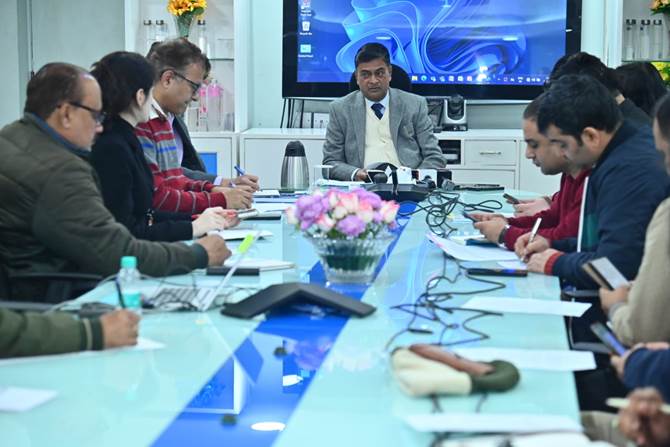
Commenting on the rules, Mr. R. K. Singh, Minister for Power, highlighted that the government’s initiatives have already significantly reduced the losses of distribution companies. He emphasized that these rules would further enhance their viability, leading to improved services for consumers.
Bhubaneswar: East Coast Railway (ECoR) is expanding its technology-driven security network, with plans to increase…
Bhubaneswar: Odisha’s traditional handloom and handicraft heritage took centre stage at Bhubaneswar Times Fashion Week…
Bhubaneswar: With physical tests for the recruitment of Foresters, Forest Guards and Excise Constables set…
Bhubaneswar: Adapting government communication to the rapidly evolving digital and artificial intelligence (AI) landscape while…
Bhubaneswar: Olympian hockey player and East Coast Railway (ECoR) Sports Officer Amit Rohidas was felicitated…
Bhubaneswar: In a major push to expand egg production and attract investment in the poultry…