Bhubaneswar: A series of heritage walks across Chilika-Banapur, Bargarh and Dhenkanal is bringing renewed attention to Odisha’s lesser-known cultural landscapes, highlighting the need to preserve living traditions, community knowledge and local histories beyond the state’s celebrated monuments and archaeological sites.
The recent walks showcased how Odisha’s heritage survives not only in grand temples and historic monuments but also in monastic institutions, village festivals, palm-leaf manuscripts, folk traditions, sacred water bodies and oral histories passed down through generations.
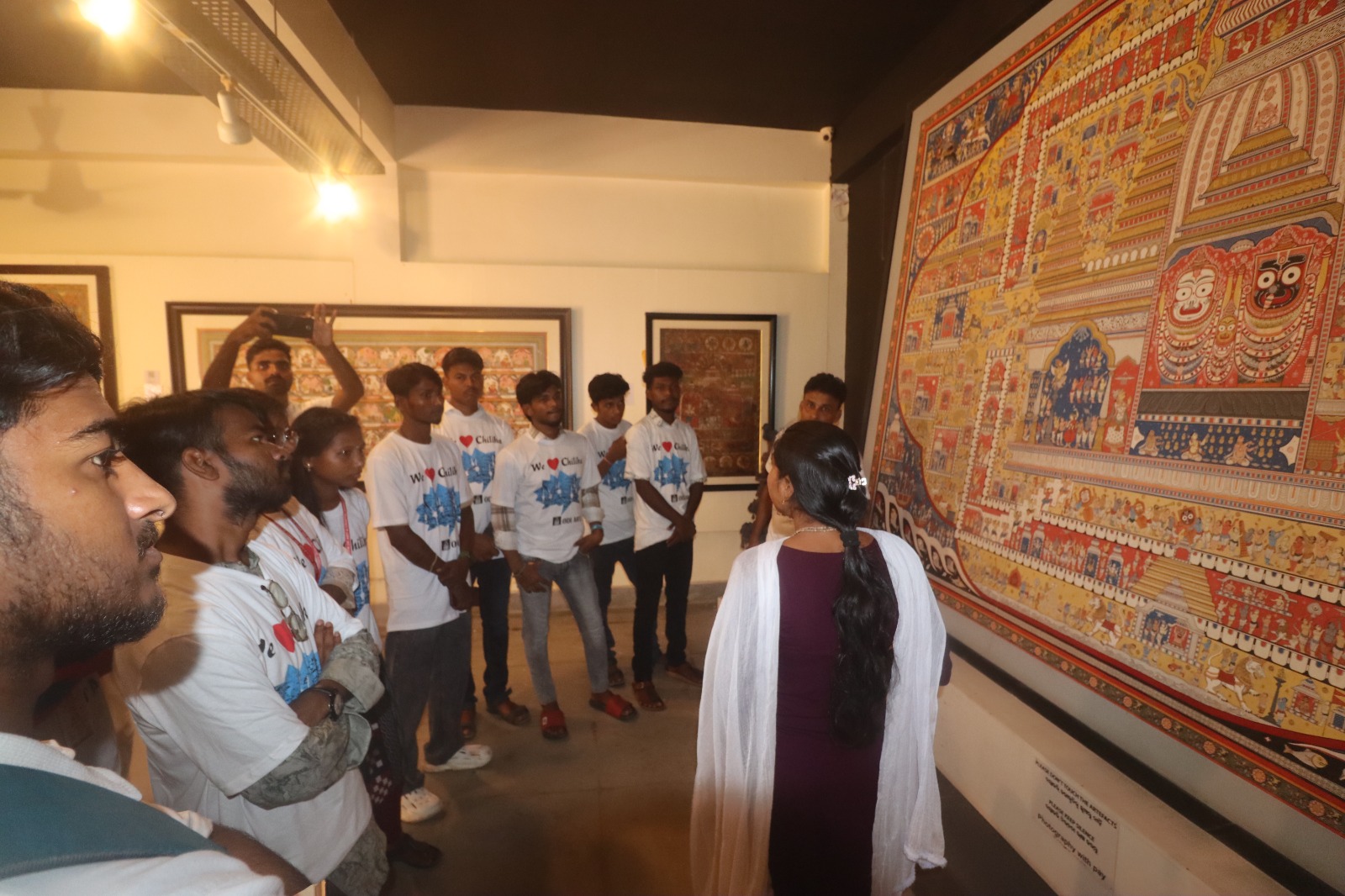
The initiative gained a new dimension with the launch of the first-ever Chilika Heritage Walk on July 19, organised by the ODI ART Centre under the leadership of founder Prasana Dash. While Chilika is globally recognised for its rich biodiversity and migratory birds, the walk introduced participants to the region’s cultural and artistic heritage.
The trail began at the ODI ART Centre, which promotes Odisha’s folk and tribal art traditions, before moving to the Bhagabati Temple and Daksha Prajapati Temple at Banapur. Organisers emphasised that traditional art forms remain meaningful only when sustained by practising communities rather than preserved merely as museum exhibits.
The fifth Bargarh Heritage Walk, organised at Sohela under the leadership of convenor Surendra Hota, explored the town’s shared religious and cultural traditions. Participants visited the historic Gouri Mandap, known for its centuries-old Durga Puja celebrations, where local residents highlighted the longstanding contribution of the Muslim community in preserving the festival.
The walk also covered the Gouranga Temple, home to a rare six-handed wooden idol of Sri Chaitanya Mahaprabhu, the Mahadev Temple and sites associated with Siddha Dama Das, a revered figure in the Mahima Dharma tradition.
Meanwhile, the 39th Dhenkanal Heritage Walk was organised at the historic Jaka Mahima Ashram in Kamakshanagar under the leadership of convenor Suresh Prasad Mishra. The ashram, regarded as an important pilgrimage centre of Mahima Dharma, offered participants insights into the 19th-century reformist movement founded by Mahima Swami, which advocated devotion to a formless divine while opposing caste discrimination and ritual hierarchy.
Participants explored the Jyoti Mandir, Bati Mandir, monks’ residences, sacred pond and other spaces that reflect the spiritual and institutional life of the Mahima tradition.
Organisers said the three heritage walks highlighted different yet interconnected aspects of Odisha’s cultural legacy—from the blend of ecology, folk art and temple traditions around Chilika to Sohela’s shared religious heritage and the living monastic traditions of Jaka.
They noted that such initiatives encourage people to view familiar places through a historical lens while providing local communities an opportunity to share knowledge that often remains absent from official records. Expanding similar heritage walks to other districts, they said, could play a vital role in reconnecting younger generations with Odisha’s diverse cultural heritage.