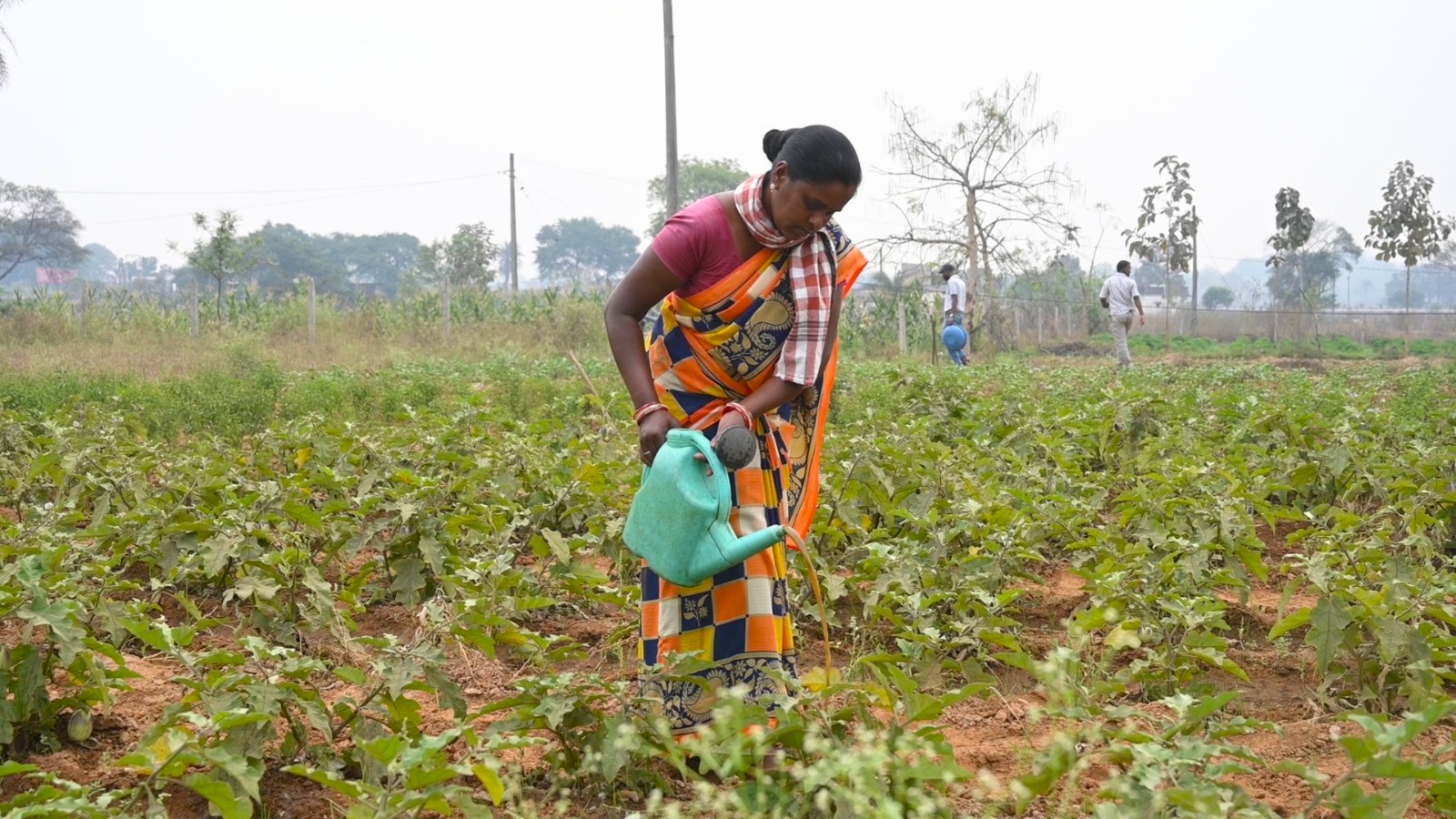
Sundargarh: Environment-friendly farming and chemical-free produce are the focus of agriculture in today’s time. Going by this mantra, Integrated Tribal Development Agency Sundargarh (ITDA) has been promoting natural farming in the region.
Natural Farming was started on a pilot basis during the financial year of 2022-23 at Telighana village of Kutra block in Sundargarh district. Under the initiative, farmers from tribal families were engaged in the program.
“In the tribal majority Sundargarh district, natural farming is being encouraged to restrict the use of chemical fertilizers and pesticides. The farmers have also shown a keen interest in natural farming. There is a sure-shot market demand for crops grown naturally. The pilot program at Telighana will soon be expanded to other parts of the district”, said Ram Krishna Gond, Project Administrator ITDA Sundargarh.
The productivity of agricultural land gets degraded upon using chemical fertilizers and insecticides which also negatively impacts the environment. ITDA Sundargarh sensitizes the tribal farmers on the same while extending them the necessary support to pursue natural farming. District Mineral Foundation (DMF) Sundargarh has been extending financial assistance towards the same.
In Telighana village, 55 farmers have been engaged in natural farming. These farmers are doing cultivation of rice and groundnut on 80 Acre land. Traditional grains are provided for cultivation to the farmers free of cost.
“Earlier, we used chemical fertilizers in the field. Then, officials from ITDA Sundargarh came and explained the benefit of natural farming to us. We were interested in natural farming and started with rice and groundnut cultivation. The yield has been good,” said Eman Budu, a farmer from Telighana village.
“Chemical fertilizer and pesticide proved heavy for our pockets. Now, by opting for natural farming, our costs have been reduced. Along with rice and groundnut, we grow vegetables using this method. Apart from a good harvest, the produce sells well in the market”, shares Bimla Barla, a woman farmer.
Natural inputs like Jeevamruta, Ghana Jeevamruta, Dasaparni Arka, Bramhastra, Neemastra, and Beejamruta are provided to farmers for use in cultivation. ITDA Sundargarh trains the farmers in preparing the above nutrients themselves. The organic manure can be produced using cow dung, cow urine, droppings of other domestic animals, gur (molasses), and besan (gram flour).
Bhubaneswar: Chief Minister Mohan Charan Majhi on Sunday inaugurated two affordable housing projects in Bhubaneswar,…
Bhubaneswar: Odisha has received the prestigious ‘Wind India 2026: Leadership in Wind Energy De-risking’ award…
Bhubaneswar: The Police Commissionerate, Bhubaneswar-Cuttack, has announced traffic restrictions across Bhubaneswar from October 16 to…
Bhubaneswar: To manage the expected rise in passenger traffic during the upcoming Durga Puja and…
Greater Noida: Odisha’s traditional handlooms and handicrafts are attracting buyers and visitors from India and…
Bhubaneswar: Food vendors at this year's Bali Jatra in Cuttack will be encouraged to use…