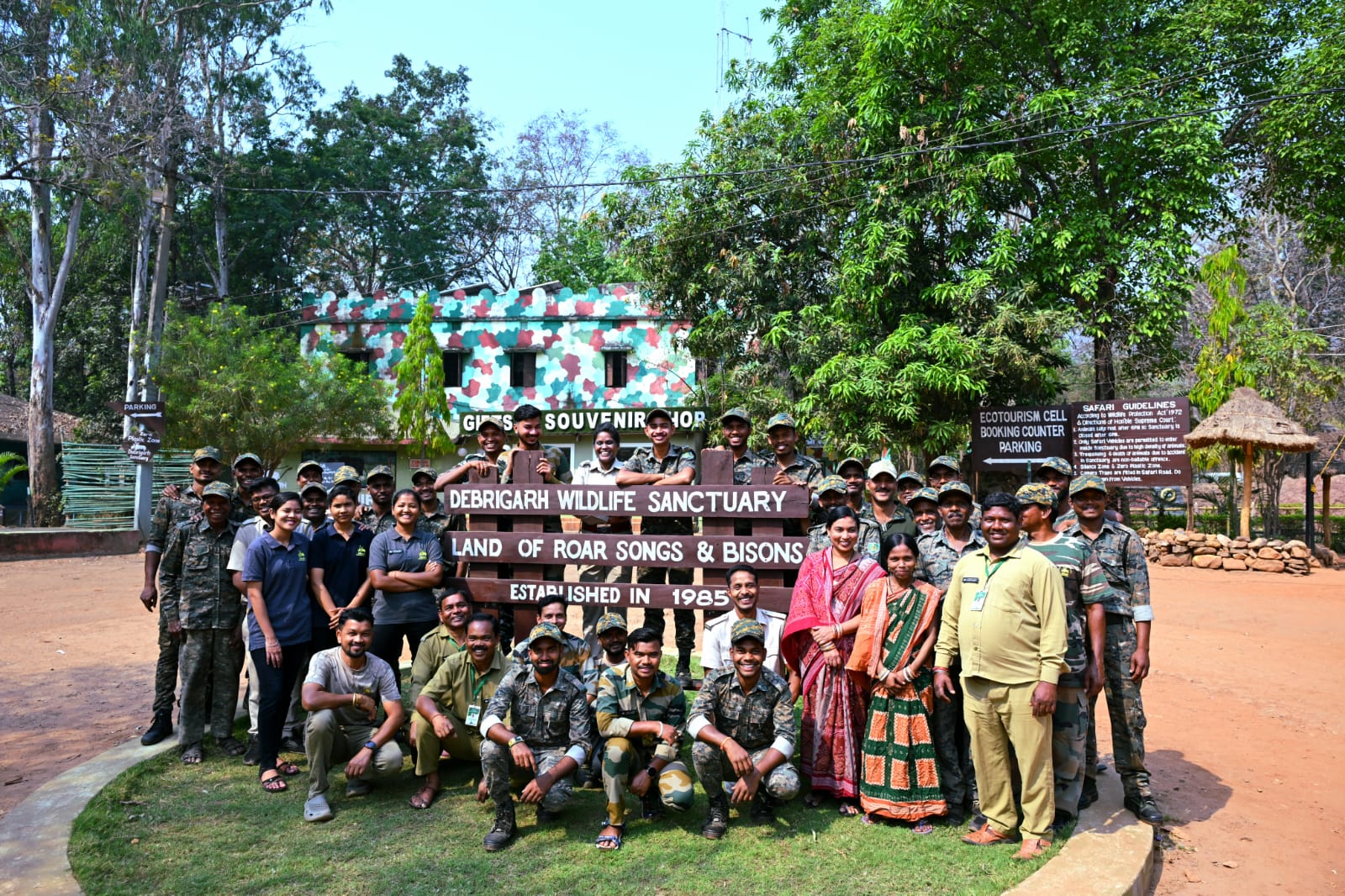
Bhubaneswar: In a remarkable example of community-led sustainable tourism, local residents managing ecotourism at Debrigarh Wildlife Sanctuary and Hirakud Wetland in Odisha have generated a record revenue of ₹5.11 crore in the financial year 2024–25. Their success not only underscores the economic potential of eco-friendly travel but also highlights how responsible tourism can power conservation and community development.
Over 85,000 national and international tourists, including visitors from 22 Indian states and countries like the US and UK, explored Debrigarh and Hirakud this year. Notably, Debrigarh has been maintained as a Zero-Plastic Zone since last year—an achievement unmatched by any other sanctuary in Odisha.
What sets Debrigarh apart is its 100% community-driven model, with all revenue reinvested in local income, ecotourism management, capacity building, and village development. Eighty-five families are directly employed in ecotourism operations, earning an average of ₹12,000–₹15,000 per month, with 40% of the workforce being women.
This year, Odisha celebrated its first women safari driver, Ms. Margaret Baru, and first woman eco-guide, Ms. Sangeeta Sikra, both from the Debrigarh region—marking a progressive leap in women’s empowerment through ecotourism.
Tourist interest has soared across multiple experiences:
9,000 visitors stayed in night-stay cottages at Debrigarh Nature Camp
27,000 tourists enjoyed jungle safaris
12,000 people took the scenic Hirakud Cruise
Thousands visited the Island Café and purchased local products from the Souvenir Shop
Compared to last year, tourist footfall has jumped by 40%, prompting the Debrigarh management to issue a “Jungle Safari Etiquette” SOP on April 1, 2025, to improve wildlife sightings and visitor experience without disturbing natural habitats.
Debrigarh has become Odisha’s premier destination for year-round wildlife sightings. Tourists can expect to spot 8–10 species in a single safari, including Indian bison, leopard, sambar, bear, langur, dhole, and more. Conservation efforts by the community have contributed to the rising population of these species and effective mitigation of human-animal conflicts.
During the tourism off-season, community members engage in habitat restoration and wildlife monitoring, further strengthening their connection to conservation.
The sanctuary introduced several attractions this year:
Island Café and Stargazing Cottages
Island Camping and Indian Bison Festival
Hiking Trails, Kayaking, Cycling, and Angling at Hirakud
Eco-treks to Bhimamandali and themed safaris using five new vehicle types
Special packages now include cruises to Bat Island, Cattle Island, and Govindpur Birds Village, trekking, bird watching, and visits to handloom markets, historical caves, and local temples.
Hirakud Wetland is a Ramsar Site and Odisha’s second-largest wintering ground for migratory birds, hosting 3.77 lakh birds from 122 species this past winter. The Debrigarh landscape, with 7% meadow coverage, creates a self-sufficient habitat supporting rich biodiversity and critical wildlife interactions.
As Debrigarh awaits declaration as a National Park and Tiger Reserve, it continues to prove that conservation, community welfare, and tourism can thrive together—making it a shining example of sustainable development in Odisha.
Bhubaneswar: Bhubaneswar will host two major national-level events on urban development and mobility this week,…
Bhubaneswar/New Delhi: Odisha is finalising a dedicated Agri-PV Policy 2026 to enable farmers to grow…
Bhubaneswar: Odisha has developed a comprehensive protocol for managing pregnancies affected by sickle cell disease,…
New Delhi: President Droupadi Murmu on Wednesday attended the award ceremony of the 65th National…
New Delhi: Union Agriculture and Farmers’ Welfare Minister Shivraj Singh Chouhan has called for developing…
Bhubaneswar: Odisha Chief Secretary Anu Garg has called for expanding livelihood opportunities for rural families…