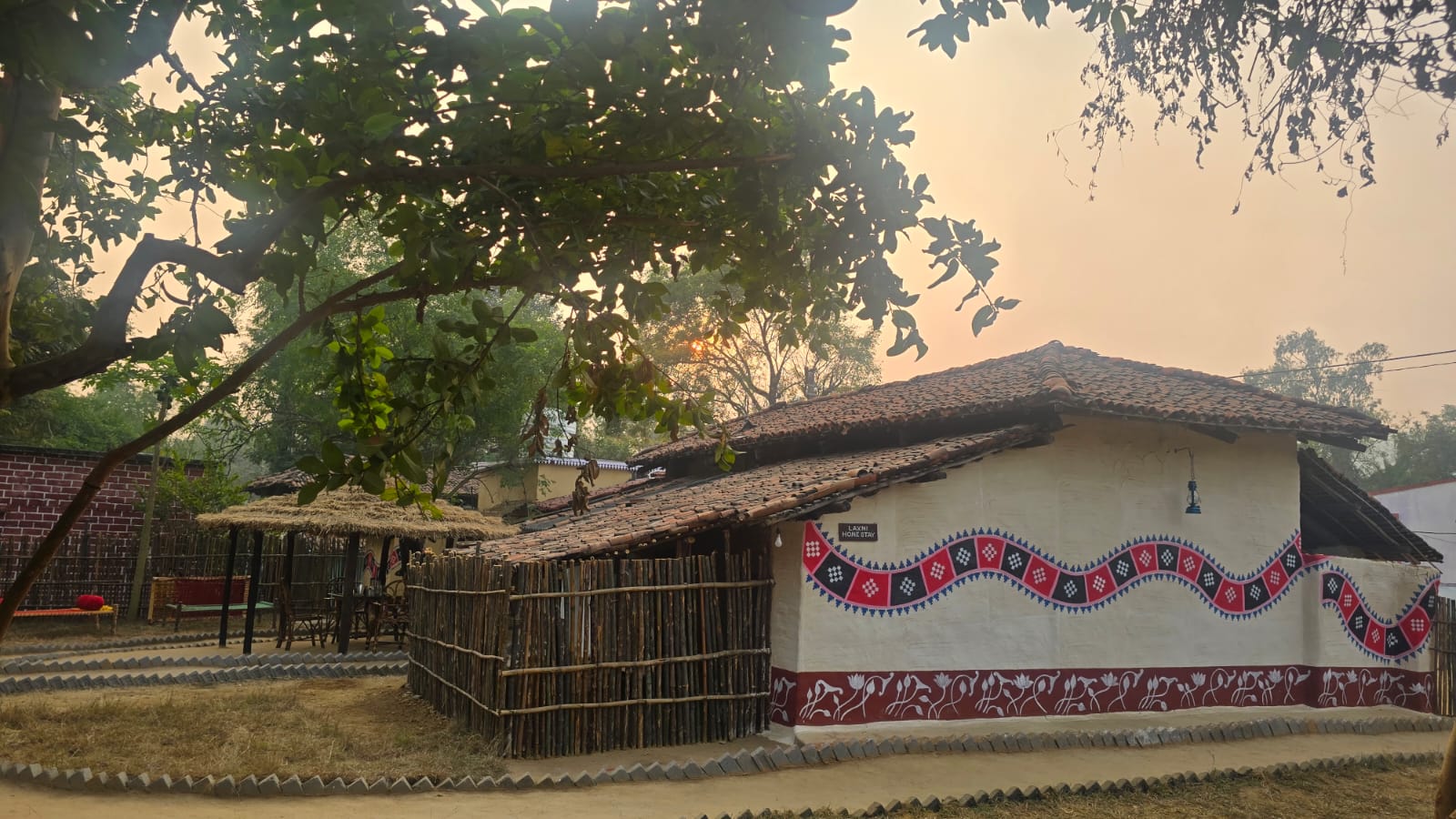
Bhubaneswar: In a landmark step toward community-led conservation and sustainable ecotourism, Debrigarh Wildlife Sanctuary today launched rustic homestay facilities in Dhodrokusum village, marking the first-ever homestay initiative in Odisha to be managed directly by forest-dependent communities under the supervision of the Forest Department. Located on the foothills of the sanctuary and adjoining the scenic Hirakud Wetland, Dhodrokusum’s new homestays offer visitors an immersive experience in nature, culture and rural life while generating livelihood opportunities for local families.
The homestay project has been designed to strengthen community stewardship in wildlife conservation by creating dignified income avenues for households that have long lived amidst the forest and navigated daily human-animal interactions. Visitors to Dhodrokusum can now enjoy an authentic, responsible travel experience through locally crafted stays, traditional cuisine, and the village’s rich folklore about wildlife, culture, religion and community traditions. The five homestays—built using natural materials such as clay, mud, cow dung and husk—feature modern amenities including attached bathrooms, comfortable furnishings, electricity backup, outdoor fireplaces and children’s play spaces. Each unit has been carefully crafted by village artisans with distinct Sambalpuri design elements that highlight the cultural aesthetics of western Odisha.
The homestays are managed by three families, each with a unique background of resilience and determination. Laxmi Guru, a widow supporting her daughter and dependent in-laws, has converted two rooms of her home into Laxmi Homestay. Rebati Bhue, who balances caregiving responsibilities for her bedridden husband while raising two daughters, now manages a single-room homestay to secure a steady income without leaving home. Sujata Bhoi, previously running a small village shop, has adapted two rooms into homestays to further support her family. All three families have undergone hospitality training at Debrigarh and are well-versed in local cuisines, ensuring a warm and culturally rich experience for guests.
Bookings for Dhodrokusum Homestay can be made through the official ecotourism platform, with the revenue model designed to directly benefit the community while maintaining strong conservation outcomes. Thirty-five percent of earnings go to the homestay owners as wages, while additional shares are allocated for recurring expenses, village development, infrastructure upgrades and the corpus fund of the PCCF (Wildlife) for training and capacity building of community members. The initiative was funded entirely through Ecotourism Development Committee (EDC) contributions, with Rs 16 lakh invested in renovating rooms, constructing toilets, improving waste management systems and ensuring essential amenities. The construction began in late October 2025 and was completed within a month.
Dhodrokusum village, recognised in 2023 as a “Green Village” under Debrigarh Sanctuary’s guidance, has made significant strides in sanitation, waste management, clean energy adoption and plastic reduction. With 48 households using LPG, maintaining zero-plastic norms and adhering to regulated waste disposal practices, the village stands as a model for eco-conscious rural living. Its proximity—just 500 metres—from the Debrigarh sanctuary entry gate adds to its appeal and ensures visitors’ safety, as many residents work as mahouts, in enforcement squads or in ecotourism operations within the sanctuary.
Guests staying in the homestays can explore a range of activities, including safaris, Hirakud cruises, birding trails, trekking, hiking, cycling and guided visits to sites such as Hirakud Dam, Samaleswari Temple, local handloom markets, weavers’ villages and natural attractions across the sanctuary landscape. A dedicated ecoguide is assigned for sightseeing, and visitors can access free WiFi at the Debrigarh Ecotourism booking counter.
Highlighting the significance of the initiative, Anshu Pragyan Das, DFO, Hirakud Wildlife Division, said the model represents a balanced integration of wildlife conservation with local culture and livelihoods. She noted that communities in Debrigarh’s coexistence and eco-sensitive zones face daily challenges involving wildlife, and homestays offer them a constructive way to strengthen conservation while sustaining their households. She added that the use of natural building materials like mud, cow dung, white earth, thatch and earthen tiles keeps the rooms thermally comfortable year-round and enhances their rustic charm. According to her, homestays will not only uplift village economies but also deepen people’s understanding of nature and wildlife, highlighting Odisha’s ecological and cultural heritage at a national and global level.
She also remarked that the initiative aligns with the recent directive of the Supreme Court of India encouraging the promotion of homestays in wildlife and eco-sensitive zones. With nearly 80 percent of Odisha’s population living in rural areas and many depending on forests, homestays present an impactful pathway to strengthen both local economies and conservation outcomes.
With its serene landscapes, vibrant culture and community-driven hospitality, Dhodrokusum Homestay in Debrigarh promises to emerge as one of Odisha’s most compelling ecotourism experiences—where visitors not only stay closer to nature but also contribute to safeguarding it.
Bhubaneswar: In a major step towards improving international travel access for residents of Odisha, Chief…
Bhubaneswar: In a move aimed at strengthening the foundation of sustainable urban growth, the Housing…
Bhubaneswar: Odisha has taken a significant lead in India’s clean energy transition by becoming the…
Bhubaneswar: In a major step towards planned urban expansion, the Bhubaneswar Development Authority on Tuesday…
Bhubaneswar: The “Bamboo Forward Summit — From Ground to Growth” was successfully organised, bringing together…
Bhubaneswar: ParibhaAsha HeritEdge Lab has launched Ekamra Anubhav 2.0, a reimagined edition of its heritage…
