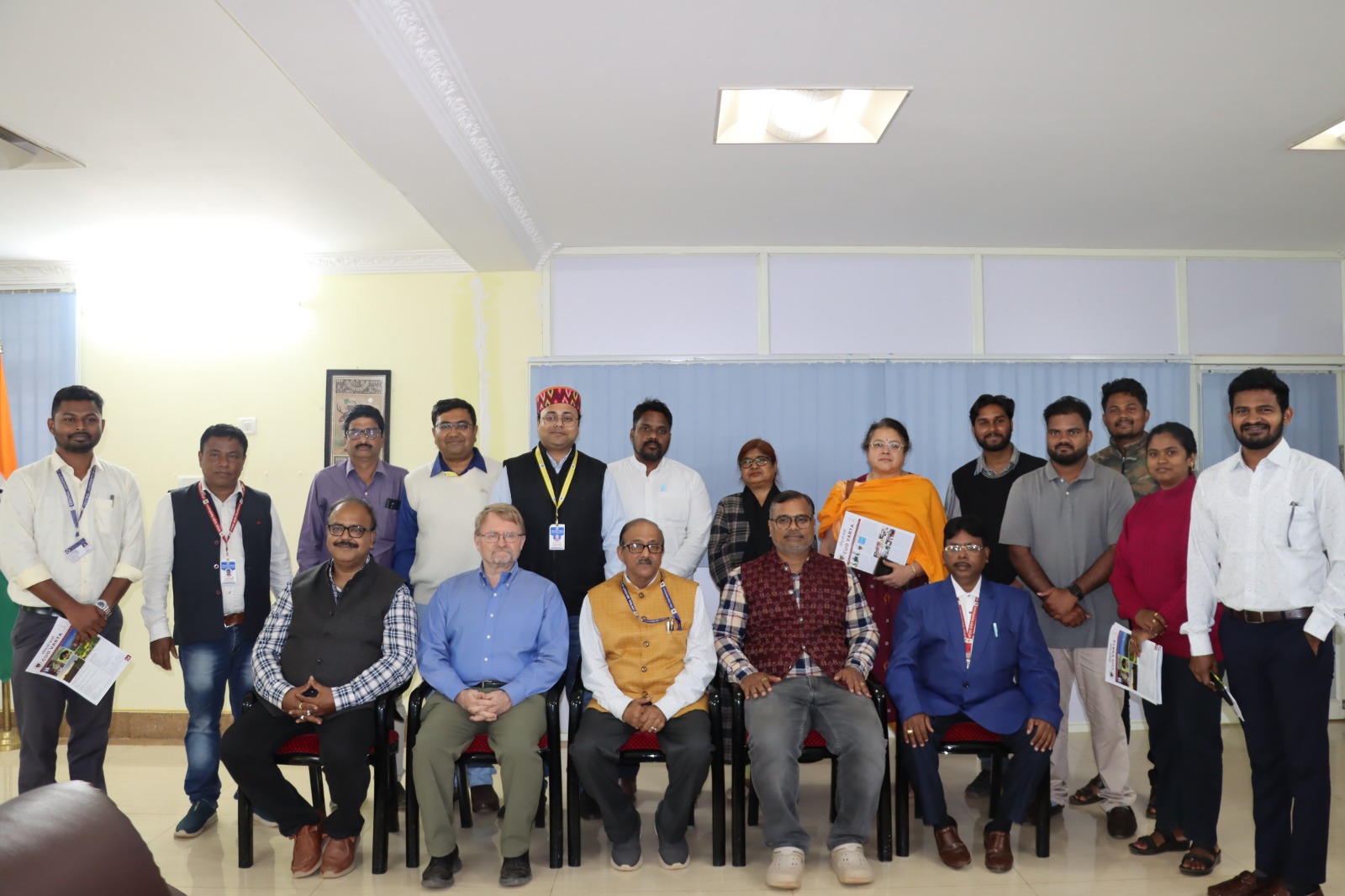
Koraput: In a significant move to amplify tribal perspectives and protect Odisha’s diverse indigenous heritage, the Central University of Odisha (CUO), Koraput, has partnered with UNICEF Odisha to set up a Tribal Communication Cell (TCC) on its campus. The initiative marks a major step toward enhancing socio-economic empowerment, preserving traditional knowledge systems, and ensuring deeper inclusion of tribal communities in the state’s development processes.
The Letter of Intent (LoI) for the initiative was formally signed on 20 November 2025 in the presence of Prof. (Dr.) N. C. Panda, Vice-Chancellor (I/c), CUO, and William Hanlon Jr., Chief, Field Office, UNICEF Odisha. Also present were Finance Officer Shri Duryodhan Sethi, Dr. Nikhil Kumar Gouda, HoD, Department of Journalism and Mass Communication, Dr. Sugata Roy, Specialist–SBC, UNICEF Odisha, Dr. Phagunath Bhoi, PRO, CUO, senior faculty members from CUO, and officials from UNICEF.
Calling the initiative a milestone for the University, Prof. Panda said the Tribal Communication Cell would empower students as well as tribal communities by fostering inclusive communication and supporting sustainable development in tribal-dominated areas. He emphasised the rich production potential of the Koraput region and the need to promote local products, adding that focused research through the TCC would further benefit tribal livelihoods and cultural preservation.
UNICEF Odisha Chief William Hanlon Jr. highlighted that the collaboration reflects a shared commitment to placing tribal perspectives at the centre of development dialogues. He said the TCC would play a transformative role by generating evidence, building capacities, and creating meaningful spaces for engagement—ultimately strengthening the rights and well-being of children and families in tribal regions.
Outlining the objectives of the new Cell, Dr. Nikhil Kumar Gouda stated that the TCC, to be managed by the Department of Journalism and Mass Communication, will function as a dynamic centre for research, documentation, capacity-building, and community outreach. With continuous technical support from UNICEF, the Cell aims to design culturally grounded communication models that authentically represent tribal lived experiences.
The signing ceremony was attended by key academic and administrative officials, including Dr. Pradosh Kumar Rath, Dr. Gourav Ranjan, Sumit Kumar Behera, Dr. Sony Parhi, and Dr. Talat Jahan Begam. The vote of thanks was delivered by Dr. Sourav Gupta, Associate Professor.
CUO PRO Dr. Phagunath Bhoi noted that the partnership marks an important stride toward strengthening respectful dialogue, informed action, and evidence-based advocacy for the holistic welfare of tribal communities across Odisha.
Bhubaneswar: The Odisha government on Monday released ₹99.26 crore in interest subvention to 1,79,809 Self-Help…
Bhubaneswar: Odisha has entered into strategic partnerships with 15 organisations and institutions to strengthen skill…
Bhubaneswar: Odisha's technology-enabled mobility platform Odisha Yatri is set to showcase its expanding mobility network…
Bhubaneswar: East Coast Railway (ECoR) has stepped up its renewable energy push, with solar installations…
Bhubaneswar: Odisha's hockey stars Amit Rohidas and Shilanand Lakra received a warm welcome at Kalinga…
Bhubaneswar: With thousands of migratory birds set to make Chilika their winter home, the wildlife…
