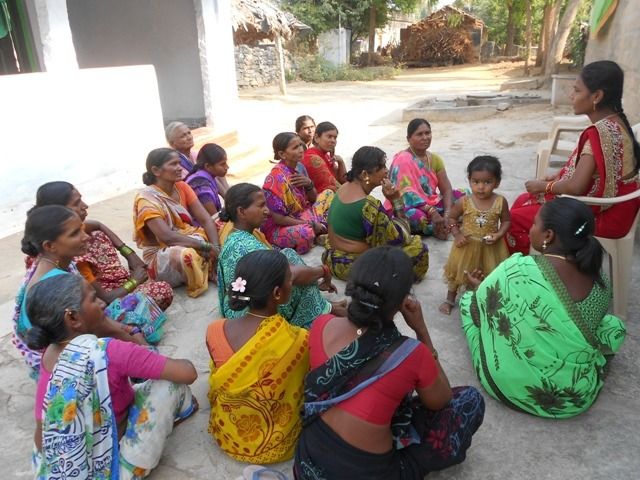
Despite accounting for nearly half of all Panchayat seats, many rural women leaders in India face deep-rooted challenges, ranging from proxy representation and political illiteracy to societal stigma. Their presence in governance is often symbolic, masking the persistent barriers that hinder true empowerment and meaningful participation in local decision-making.
New Delhi: The lack of rural women’s participation in politics has been talked about much in the corridors of politics. Rural women’s presence in governance is often symbolic, masking the persistent barriers that hinder true empowerment and meaningful participation in local decision-making. Today, over 1.3 million women serve as elected representatives in Panchayati Raj Institutions (PRIs), making up approximately 46% of all members. States such as Bihar, Odisha, and Rajasthan have gone further by increasing the reservation for women to 50%, reflecting a stronger commitment to gender-inclusive governance.
These numbers show the government’s commitment to enhancing women’s greater participation and role in decision-making and legally empowering them through reservation policies. However, there are massive challenges that prevent women from truly participating in politics.
Legal Foundation: The 73rd Amendment
The 73rd Constitutional Amendment Act of 1992 was a turning point in India’s democracy. It established PRIs as constitutional bodies across rural areas with a three-tier system: Gram Panchayat (village level), Panchayat Samiti (block level), and Zila Parishad (district level).
This amendment reserved one-third of all seats in Panchayats for women, including those from Scheduled Castes (SCs) and Scheduled Tribes (STs). It also required that one-third of chairperson positions like Sarpanch, be held by women.
Despite legal progress, rural women face three major obstacles that limit their political participation.
Proxy participation is one of the biggest problems rural women face. In proxy participation, women serve as placeholders for male relatives while having no real decision-making power and are often encouraged or forced to act as stand-ins for male relatives who cannot hold office due to reservations or other reasons.
India has 1.5 million elected women representatives across 3.2 million local governance bodies. Yet in states like Uttar Pradesh, Bihar, Haryana, and Rajasthan, proxy leadership remains in practice. Due to social pressures, women don’t attend meetings, make decisions, or even appear on campaign materials. Their role turns out to be ceremonial, attending sessions, signing documents, and casting votes decided by others.
This system misuses the legal requirement for women’s participation. Instead of empowering women, it becomes a way for men to extend their political influence while keeping real power among themselves.
The second reason is a lack of political literacy. Many rural women struggle with political illiteracy, not only due to limited formal education, but also because of entrenched social norms that confine them to domestic roles. These norms suggest that a woman’s place is in the home, managing household tasks and caregiving responsibilities, which leads many women to internalize the belief that their contributions should remain within these boundaries.
Limited exposure to civic life leaves many rural women unaware of how the government functions. Without basic political literacy, such as understanding rights, governance, and elections, they struggle to engage meaningfully in democracy.
The third reason is stereotyping and social barriers. Beyond limited knowledge, rural women often face strong societal resistance when they attempt to enter politics. Their competence is routinely questioned, and leadership qualities dismissed as inappropriate for women. Common stereotypes portray them as too emotional or indecisive to make impactful political decisions, reinforcing the perception that governance is a male domain.
Many aspiring women leaders endure moral scrutiny and social policing for defying traditional norms, whether it’s for speaking publicly, traveling for political work, or working beyond conventional hours. Such scrutiny not only questions their character but also undermines their credibility. These social barriers significantly deter women from stepping into political spaces.
Success Story: Mamta Devi’s Leadership
Mamta Devi from Himachal Pradesh, a Scheduled Caste woman, began her journey in 2001 through a local women’s group. Rising through community work, she became panchayat president for two terms, tackling sanitation, substance abuse, and youth issues.
With 15+ years of grassroots experience, she addressed fund delays, healthcare access, and clean water. Her work with officials and leaders shows rural women can lead and drive real change when empowered.
Empowering rural women in politics requires targeted policy solutions across four key areas. First, building awareness at the grassroots is essential. This includes civic education through schools, Anganwadi centers, and local media like radio and WhatsApp in regional languages. Training women leaders and NGOs to educate others can further boost awareness. Second, creating strong community support systems through block-level centers, peer networks, and mentorship programs ensures ongoing encouragement and resources. Third, ensuring economic independence is vital. Women need access to financial resources, training in finance and communication, and awareness of government schemes to build confidence and fund political participation. Lastly, breaking social and cultural barriers by involving men in discussions, promoting successful female leaders, and conducting gender sensitization workshops can shift public perception and normalize women in leadership roles. Together, these steps can help rural women overcome structural obstacles and actively engage in political decision-making.
Empowering rural women in politics goes beyond representation; it’s key to a more inclusive and responsive democracy. While the 73rd Amendment created opportunities, true empowerment requires breaking social barriers, enhancing political literacy, and offering sustained support. With the right tools and recognition, rural women can lead people-centered, sustainable development. Investing in their leadership is not charity, but a smart move for India’s future.
Note: Kiran Kanwar is pursuing a Graduate Certificate in Public Policy course from the Takshashila Institution, a non-partisan public policy think tank.
Bhubaneswar: East Coast Railway (ECoR) is expanding its technology-driven security network, with plans to increase…
Bhubaneswar: Odisha’s traditional handloom and handicraft heritage took centre stage at Bhubaneswar Times Fashion Week…
Bhubaneswar: With physical tests for the recruitment of Foresters, Forest Guards and Excise Constables set…
Bhubaneswar: Adapting government communication to the rapidly evolving digital and artificial intelligence (AI) landscape while…
Bhubaneswar: Olympian hockey player and East Coast Railway (ECoR) Sports Officer Amit Rohidas was felicitated…
Bhubaneswar: In a major push to expand egg production and attract investment in the poultry…