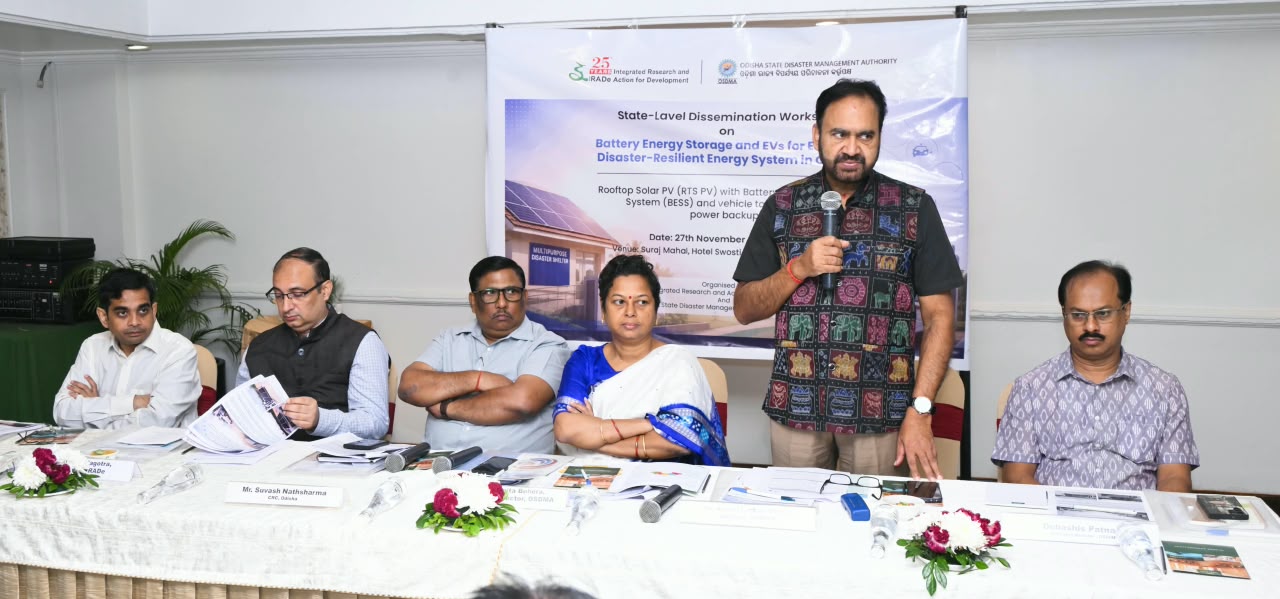
Bhubaneswar: Odisha is exploring the wider use of solar power and battery energy storage systems (BESS) in its disaster shelters to ensure uninterrupted electricity supply during cyclones, floods and other extreme weather events.
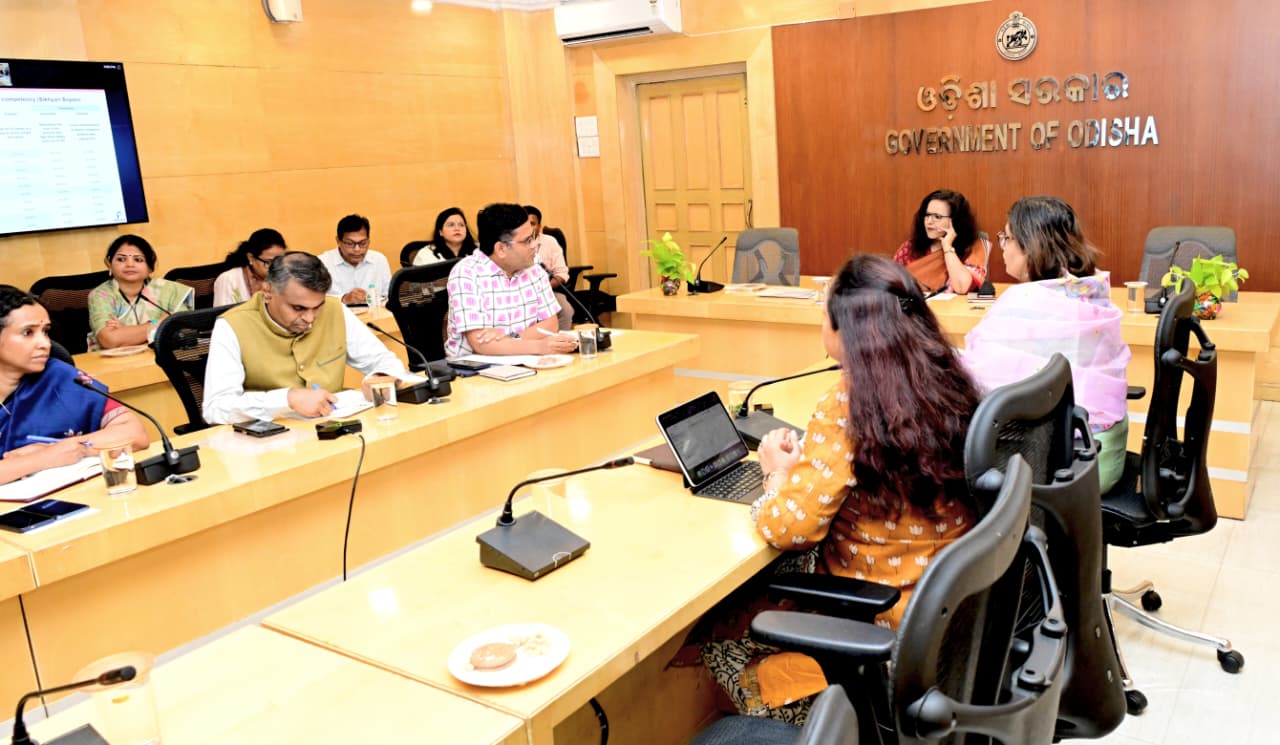
The Odisha State Disaster Management Authority (OSDMA), in collaboration with Integrated Research and Action for Development (IRADe), organised a State-level dissemination workshop on “Battery Energy Storage and EVs for Enabling Disaster-Resilient Energy Systems in Odisha” to discuss the findings of a feasibility study and pilot projects.
As part of the initiative, IRADe conducted a techno-economic feasibility assessment and installed solar hybrid power systems at two Multipurpose Disaster Shelters (MDSs) in Puri district. The pilot locations are Narsinghpatana in Brahmagiri block and Keutajanga in Astaranga block. Each shelter has been equipped with a 3 kWp solar power system integrated with a Battery Energy Storage System.
The initiative aims to ensure reliable electricity for essential services such as lighting, communication and water supply during emergencies, when conventional power networks may remain disrupted for extended periods.
Presenting the feasibility study, IRADe Deputy Director Dr Probal Ghosh said appropriately designed solar photovoltaic and battery storage systems could reduce dependence on grid electricity and diesel-based backup while ensuring a more reliable power supply.
The assessment found that selected configurations with stationary battery storage have the potential to support critical shelter requirements for more than 24 hours during prolonged power outages, depending on battery capacity, system design, energy requirements and vehicle availability.
The systems can also reduce electricity consumption from the grid and associated costs during normal operations, while improving emergency preparedness.
With more than 800 multipurpose disaster shelters and school-cum-shelters across Odisha, the pilot project offers scope for the phased adoption of such energy solutions, particularly in cyclone- and flood-prone coastal districts. The findings will also help develop technical standards, suitable system designs, financing arrangements and operation and maintenance protocols for wider implementation.
OSDMA Executive Director Sushmita Behera thanked IRADe for its collaboration in setting up the pilot systems, describing the initiative as a first-of-its-kind effort for disaster shelters. She said the experience gained from the two locations could help expand the initiative to other shelters across the State.
OSDMA Advisor Dr Kamal Lochan Mishra said the project marked an important step towards integrating clean energy solutions with disaster risk management. Combining renewable energy, battery storage and appropriate backup arrangements would help make essential community infrastructure more resilient and better prepared for emergencies, he added.
IRADe Director Rohit Magotra highlighted the need to combine conventional and emerging technologies to strengthen energy security at disaster shelters. He said the pilot experience would help design integrated clean energy systems that could be managed with community participation.
The workshop brought together stakeholders from the Energy Department, renewable energy agencies, power distribution companies, village-level Disaster Shelter Management Committees, solar power developers, battery manufacturers, research organisations and civil society groups.
Discussions focused on the technical, financial, institutional and policy measures required to expand the initiative. Better coordination among government departments, convergence of existing schemes, suitable financing mechanisms and local capacity-building for operation and maintenance were identified as important factors for sustaining the systems.