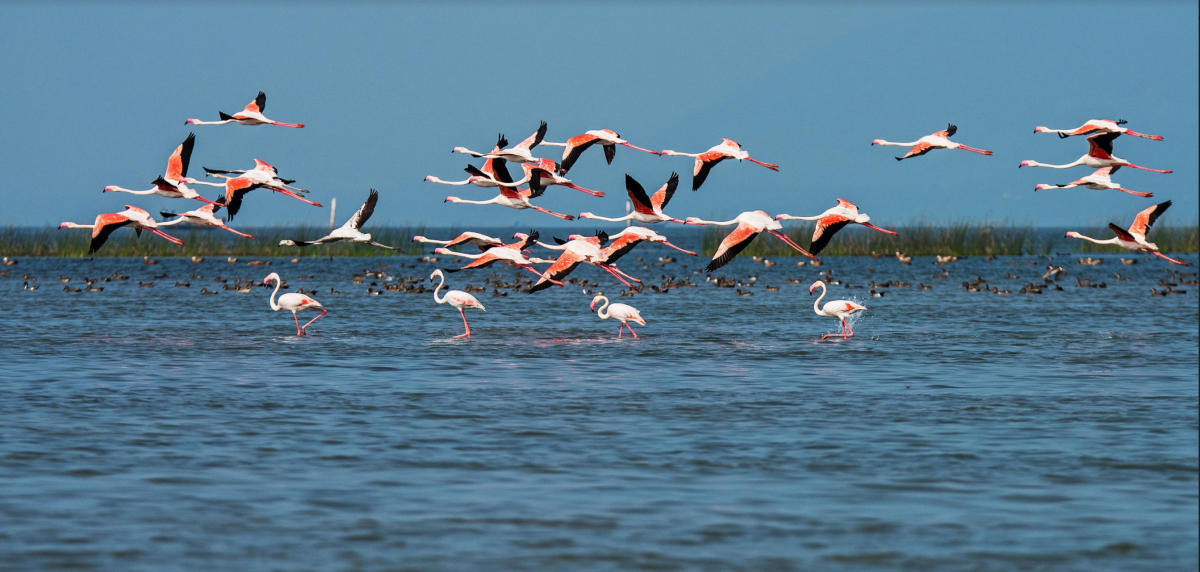
Bhubaneswar: With thousands of migratory birds set to make Chilika their winter home, the wildlife authorities have intensified protection measures across the lagoon, deploying dedicated personnel to prevent poaching and safeguard key bird habitats.
The Chilika Wildlife Division has established 22 temporary bird protection camps, besides deploying two mobile patrol units and setting up a control room to monitor the lagoon during the migratory season.
According to Divisional Forest Officer Amlan Nayak, the camps became operational on October 1 and will continue functioning until the end of March, covering the entire period of the birds’ stay in Chilika.
The Tangi range, identified as one of the more vulnerable areas, has received the highest number of protection camps, with 11 set up in the range.
Another four camps have been established in the Balugaon range, while the Rambha range has three. The Satapada and Chilika ranges have two camps each.
Each camp has been staffed with two to three personnel, who will remain responsible for surveillance, habitat protection and preventing illegal hunting activities.
The wildlife division has planned 24-hour patrolling across Chilika to keep poachers under close watch and respond quickly to any threat to migratory birds.
The two mobile patrol teams will supplement the personnel stationed at the temporary camps, allowing forest officials to cover wider areas of the lagoon. A control room will also coordinate monitoring and response during the season.
The intensified security arrangements have been put in place ahead of the annual arrival of migratory birds from different parts of the world.
Chilika, one of India’s most important wintering grounds for migratory birds, attracts large numbers of avian visitors every year. The lagoon and its surrounding wetlands provide feeding and resting grounds for several species during the winter months.
With the migratory season now underway, the wildlife authorities are maintaining heightened surveillance to ensure a safe environment for the birds and protect the ecological importance of the lagoon.