Bhubaneswar: Odisha has stepped up efforts to make government services faster, more transparent and technology-driven, with Chief Secretary Anu Garg directing departments to complete pending digital interventions under the BRAP 2026 and DBRAP 2025-26 by August 31.
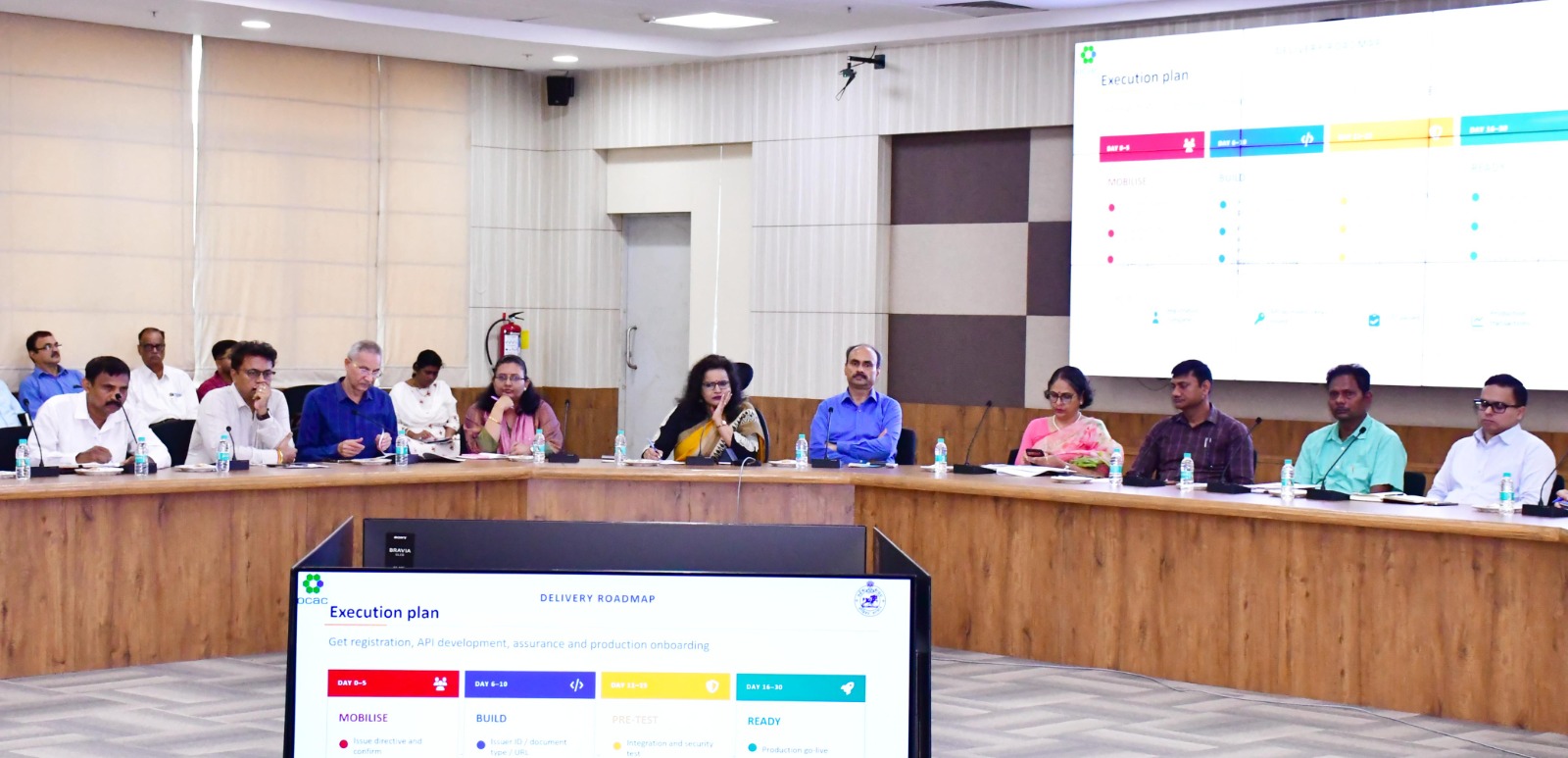
Garg issued the directions while chairing a high-level review meeting on Wednesday to assess the progress of business and district-level reforms. The meeting brought together senior officials from 21 departments, IT System Integrators, the Odisha Computer Application Centre (OCAC) and the National Informatics Centre (NIC).
The review assessed individual services and reform points where implementation gaps remain, particularly in portal development, system integration, Entity Locker adoption and public dashboard development.
The Chief Secretary emphasised that the objective of technology-led reforms should be to make government services simpler and more accessible, rather than merely meeting compliance requirements.
She directed departments to ensure that businesses and citizens can access services through seamless digital processes, with fewer physical interactions, reduced paperwork and minimal delays.
Departments and their System Integrators were asked to coordinate closely with NIC and OCAC and resolve technical issues within the prescribed timelines.
ACS, Industries and Managing Director, IPICOL presented the department-wise progress and action plans during the meeting. Principal Secretaries and Commissioner-cum-Secretaries of the concerned departments also participated in the discussions.
The meeting gave particular attention to integrating departmental Government-to-Business (G2B) and Government-to-Citizen (G2C) services with GO SWIFT and Odisha One.
Departments were asked to establish seamless two-way integration so that applications can be routed through the appropriate single-window platform and applicants can receive real-time updates on the status of their transactions.
The move is also expected to strengthen digital monitoring of industrial projects through state-level project tracking mechanisms.
Officials also reviewed the implementation of Entity Locker across departmental G2B portals.
The platform is intended to allow documents already submitted to or issued by government departments to be securely accessed and reused, reducing the need for investors and businesses to repeatedly furnish the same documents for different services.
With Entity Locker integration forming part of the BRAP 2026 requirements, departments where the process remains incomplete were instructed to coordinate immediately with their System Integrators and concerned technology agencies.
The development and updation of public dashboards were another key focus of the review.
Departments were directed to provide district-level information on applications received, approvals granted, pending applications, statutory timelines and processing periods. Inspection dashboards are also expected to record compliance with prescribed timelines and enable uploading of inspection reports.
The review covered digital interventions across areas including land and property records, Revenue Court services, property tax, GST monitoring, building approvals, electricity, employment, health and education, besides other G2B services covered under BRAP and DBRAP.
Garg directed all concerned departments to assign clear responsibility for pending interventions and maintain close coordination with IPICOL, NIC, OCAC and System Integrators to ensure timely completion.
The August 31 deadline was reiterated for completing the targeted IT reforms. IPICOL and the Industries Department will undertake another review on August 25 to assess progress and address any remaining issues before the final deadline.
The exercise is part of Odisha’s broader effort to strengthen its business regulatory environment through digitalisation, simplified procedures and transparent service delivery, with the aim of making it easier and more predictable for businesses and investors to interact with the government.