Dhenkanal: The 25th edition of the Dhenkanal Heritage Walks (DHW) turned into a vibrant celebration of history, architecture, and local legend on Sunday as nearly 50 heritage enthusiasts from across Odisha explored the cultural richness of Manipur village and its revered Radhakanta Jew Temple.
The heritage trail began with a visit to the iconic Lord Radha-Krishna shrine, where participants witnessed a rare brass idol said to have been brought from Nadia, West Bengal, in the early 20th century. A giant mrudanga housed at the temple added to the spiritual ambience. Built in 1937 by the collective effort of villagers and key contributors like Gopinath Sangram Singh and Sridhar Mangaraj, the temple stands as a testament to community-driven heritage preservation.
The temple’s architecture sparked lively discussion among participants. Professor Durga Biswal noted that the structure defies traditional Kalingan classifications like Khakra or Rekha styles, instead reflecting a unique blend of local and Bengali influences often seen in Krishna temples of Bengal. The temple’s only visible parshwadevata (subsidiary deity) is goddess Saraswati, adding to its distinctive character.
The walk wasn’t just about bricks and history. At the temple premises, local elders and committee members engaged with the visitors in a storytelling session that delved into the naming of Manipur village. According to village lore, the name derives from “mana”—a local measuring unit—symbolizing the land’s perennial bounty. Manipur, with its fertile fields and abundant water, has long supported prosperous agriculture, a fact the villagers remain proud of.
Temple priest Rabinarayan Debata added a spiritual dimension, recounting tales of how the deity Radhakanta Jew is believed to have protected the village from water crises and health issues. Convener Suresh Prasad Mishra welcomed the participants and emphasized the importance of such walks in uncovering forgotten facets of Odisha’s rural heritage, while Dr. Malay Pati concluded the session with a vote of thanks.
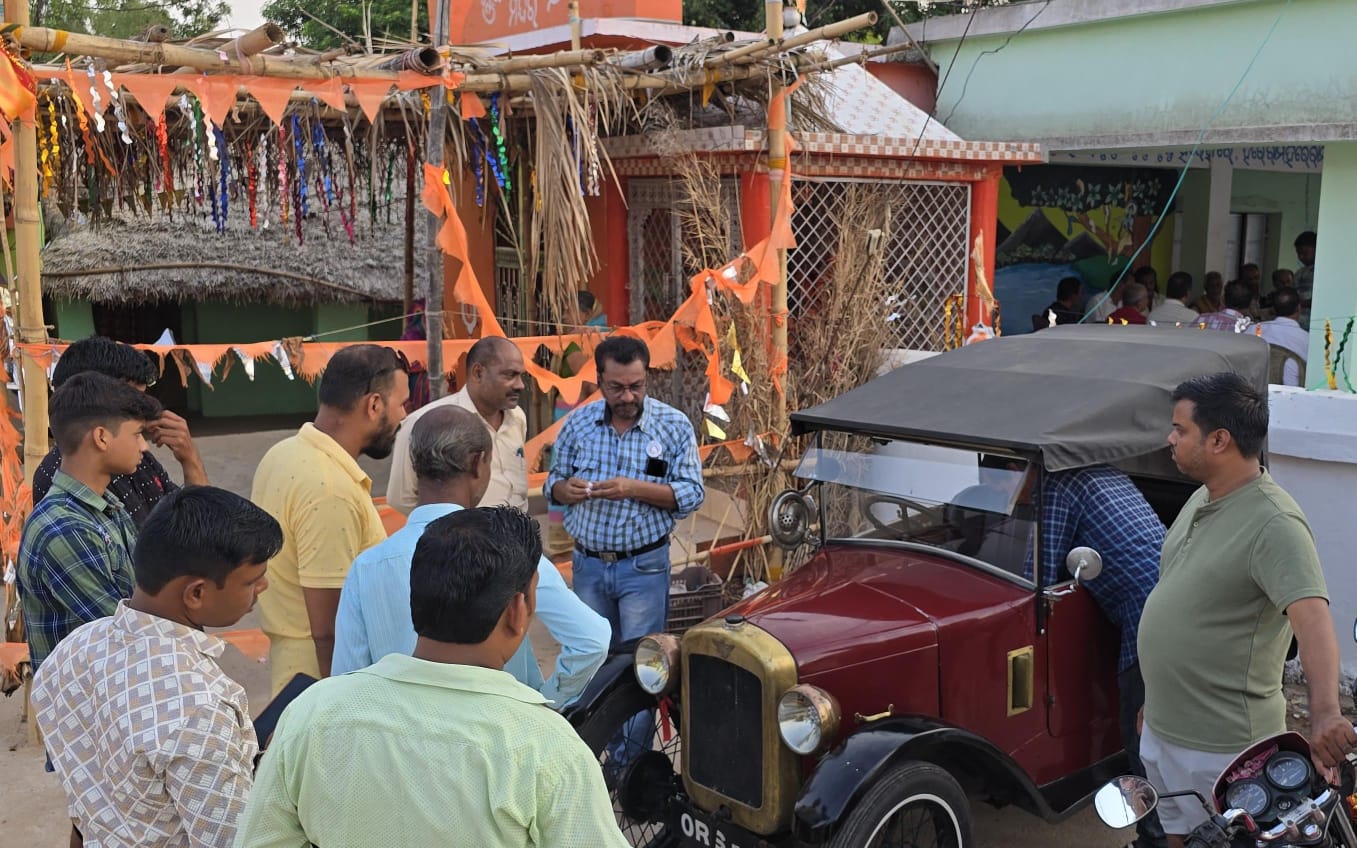
One of the highlights of the walk was the presence of a vintage 1929 Baby Austin car, driven in by heritage enthusiast Saranath Mishra of Dhenkanal. The well-preserved automobile was a visual treat and a conversation starter among both villagers and visitors.
Following the temple visit, the group made their way to Sadeibareni—known for its iconic Dhokra metalcraft—not to witness the artisanship this time, but to indulge in Dhenkanal’s traditional delicacy, bara, freshly prepared at a local shop.
Adding a broader context, Biswaranjan Dehury, convenor of Odisha Heritage Walks, shared how similar heritage trails are actively held in cities like Cuttack, Puri, Jagatsinghpur, Balasore, and Baripada. These walks, organized by passionate local groups, continue to weave together stories of place, people, and tradition—one step at a time.
Bhubaneswar: Odisha has stepped up its disaster preparedness as a weather system over the region…
Bhubaneswar: Odisha has intensified its efforts to tackle drug abuse in six identified narcotics hotspots,…
Bhubaneswar: Bamboo artisans, entrepreneurs and self-help groups in Odisha now have a dedicated marketplace to…
Gurgaon: Shunya Agritech has launched FodrPulse, a free mobile application designed to help hydroponic fodder…
Bhubaneswar: The Bhubaneswar Development Authority (BDA) has opened the online application process for allotment of…
Bhubaneswar: Odisha is looking to make irrigation projects more closely linked with farm production and…
