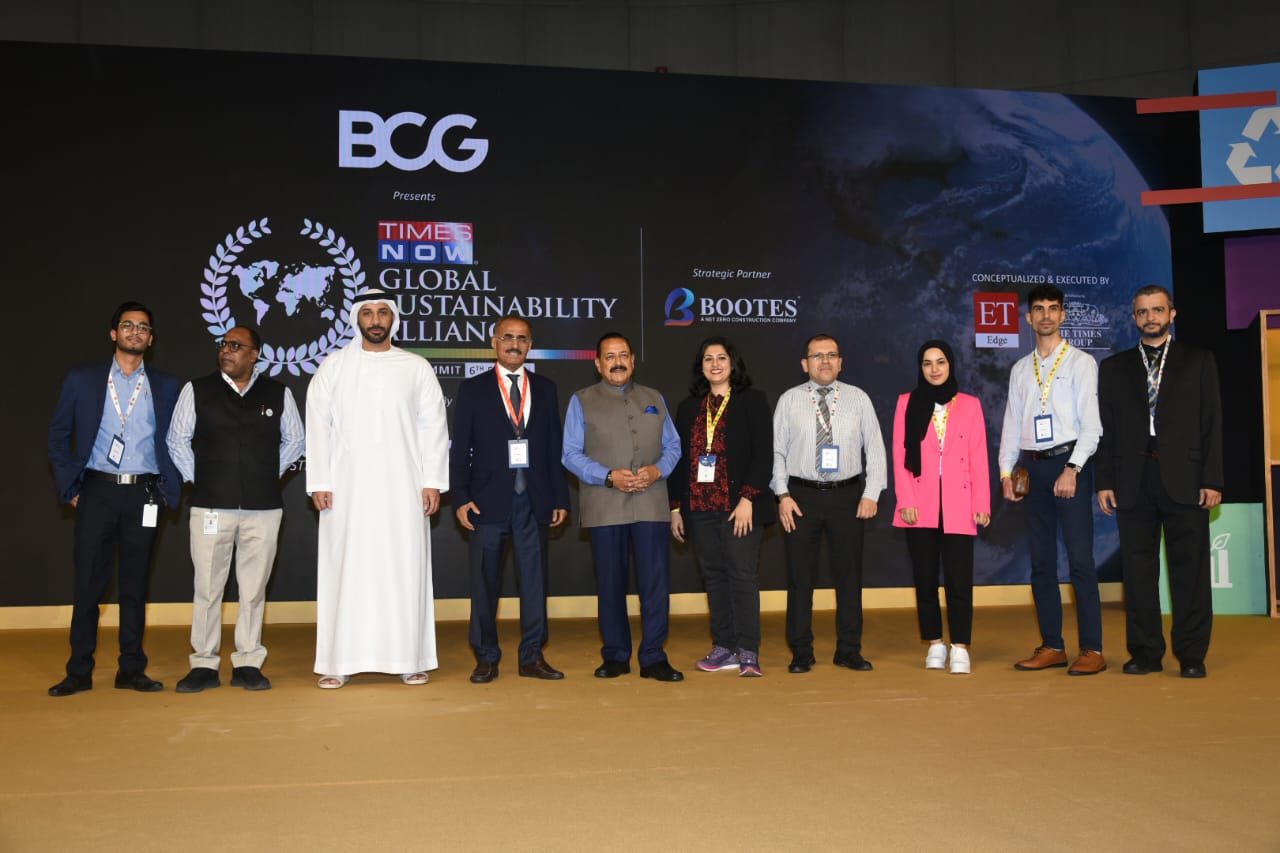
New Delhi: Union Minister of State (Independent Charge) for Science & Technology, Dr. Jitendra Singh, called for decisive action to address the immediate realities of climate change, urging global collaboration to meet science-based climate targets. Speaking at the 6th edition of the Times Now Global Sustainability Alliance’s SDG Summit 2024, themed “Game Changing India’s Science-Based Targets for Climate Change,” Dr. Singh reaffirmed India’s commitment to balancing its rapid economic growth with sustainable development.
“Climate change is no longer a distant threat—it is an immediate reality impacting lives, economies, and the future of our planet,” said Dr. Singh, stressing the urgent need for collective action to mitigate its effects. He outlined India’s significant role in combating climate change through ambitious science-based targets that align with the Paris Agreement goals of limiting global warming to well below 2 degrees Celsius, with aspirations to restrict it to 1.5 degrees.
Dr. Singh highlighted that collaboration across government, industry, academia, and civil society will be critical to achieving these goals. Innovation, particularly in renewable energy, sustainable agriculture, and green technologies, will be at the heart of India’s climate strategy. “Under Prime Minister Narendra Modi’s leadership, we are supporting research and development to drive the innovations necessary for a sustainable future,” Dr. Singh added.
The minister emphasized India’s National Action Plan on Climate Change (NAPCC), launched in 2008, as the cornerstone of the country’s climate policies. The NAPCC includes eight key missions, each addressing critical aspects of climate adaptation and mitigation:
Dr. Singh also outlined India’s sector-specific strategies that bolster its climate goals:
Dr. Singh urged every citizen to take part in addressing climate change, emphasizing that even small lifestyle changes can have a significant impact. He encouraged a cultural shift towards sustainability, stating, “We must foster a culture of sustainability in our daily lives and collaborate to build a resilient, sustainable future.”
He concluded by congratulating the organizers of the SDG Summit and wishing them success in their continued efforts to promote global sustainability.
With India’s firm commitment to climate action and innovative strategies, the country is poised to lead the way in global efforts to combat climate change while driving sustainable development.
Bhubaneswar: With temperatures rising across the state, the Odisha government has directed all schools to…
Bhubaneswar: In a major move to streamline the supply of LPG and petroleum products, the…
Bhubaneswar: Odisha has rolled out a week-long statewide capacity-building initiative, “SĀDHANA Saptah – 2026,” aimed…
Bhubaneswar: In a major push to enhance early childhood care infrastructure, Odisha inaugurated 1,889 newly…
Bhubaneswar: In a major step towards improving international travel access for residents of Odisha, Chief…
Bhubaneswar: In a move aimed at strengthening the foundation of sustainable urban growth, the Housing…
