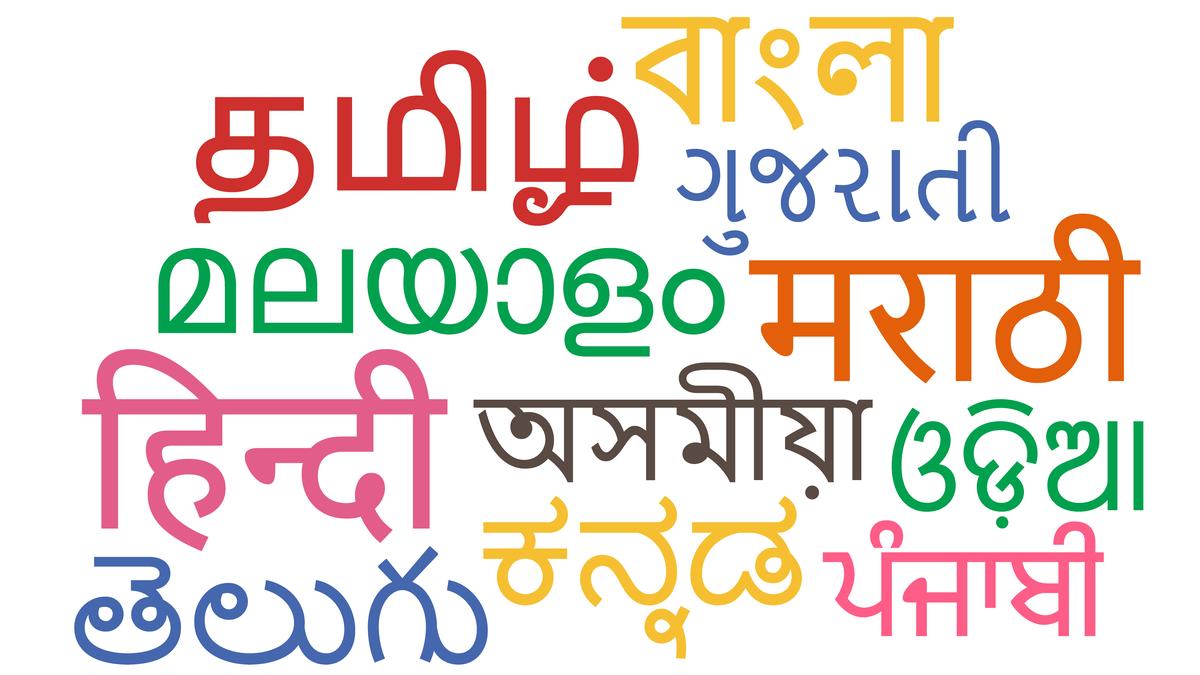
New Delhi: In a landmark decision, the Union Cabinet, chaired by Prime Minister Narendra Modi, has conferred the prestigious status of Classical Language to five prominent Indian languages—Marathi, Pali, Prakrit, Assamese, and Bengali. This move recognizes these languages as vital custodians of India’s ancient and profound cultural heritage, reflecting their significant historical and literary contributions to the subcontinent.
The recognition of these languages as Classical Languages emphasizes their rich antiquity and the wealth of literary and cultural knowledge they represent. The status not only acknowledges the ancient roots of these languages but also highlights their role in preserving the essence of the historical and cultural milestones of their respective speech communities.
The concept of conferring Classical Language status in India was introduced on October 12, 2004, when Tamil was the first language to receive this recognition. The criteria for identifying a Classical Language included high antiquity of its early texts or recorded history, a substantial body of ancient literature that is regarded as a valuable heritage, and an original literary tradition that is not borrowed from another speech community. In 2005, the criteria were further revised, and Sanskrit was added to the list of Classical Languages.
The criteria currently followed, as revised by the Linguistic Experts Committee (LEC) under the Sahitya Akademi in 2024, are as follows:
Marathi’s journey toward receiving Classical Language status began in 2013, with a proposal submitted by the Maharashtra Government to the Ministry of Culture. The Linguistic Experts Committee (LEC) endorsed the language’s qualification based on the established criteria. However, the process was delayed due to further consultations within the government, with the Prime Minister’s Office recommending a review to ensure that other deserving languages were also considered.
This led to a broader exercise, which included proposals from Bihar, Assam, and West Bengal to grant Classical Language status to Pali, Prakrit, Assamese, and Bengali. After careful deliberation, the LEC unanimously recommended all five languages—Marathi, Pali, Prakrit, Assamese, and Bengali—for the Classical Language designation, citing their compliance with the revised criteria.
To date, the Government of India has recognized the following languages as Classical Languages:
The recognition of these five additional languages expands the scope of India’s linguistic and cultural diversity acknowledged under the Classical Language framework.
The conferment of Classical Language status not only serves as recognition of the linguistic and literary achievements of these languages but also reinforces the need for their preservation. As Classical Languages, Marathi, Pali, Prakrit, Assamese, and Bengali will receive special focus in terms of scholarly research, preservation efforts, and educational support, ensuring that future generations continue to have access to their rich literary and cultural traditions.
Bhubaneswar: Recognising their gold medal-winning performances at the 2026 Asian Games in Japan, Odisha Chief…
Bhubaneswar: Two school-going sisters from Odisha have used a multiplication table to deliver a social…
Bhubaneswar: The Satwalipi Committee on Mahaprabhu Lingaraj Temple has submitted its third interim report to…
Bhubaneswar: Odisha will organise a state-level summit to finalise priorities and accelerate the implementation of…
Bhubaneswar: The Housing and Urban Development Department has asked Urban Local Bodies (ULBs) across Odisha…
Bhubaneswar: From exploring ancient temples and the story of Odisha’s capital city to discovering local…
