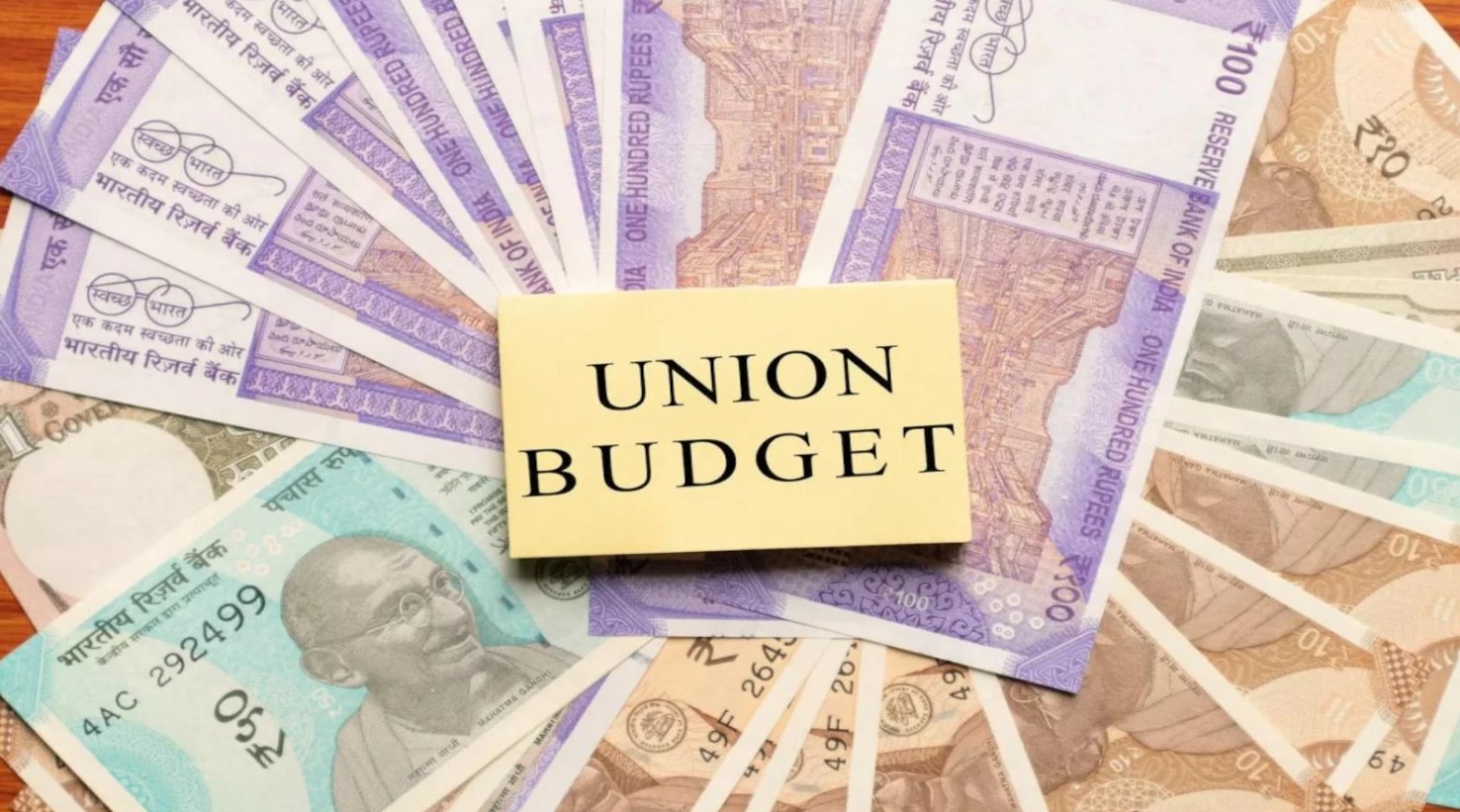
New Delhi: Union Minister of Finance and Corporate Affairs Nirmala Sitharaman, while presenting the Union Budget 2026–27 in Parliament on Tuesday, asserted that the Government led by Prime Minister Narendra Modi has consistently chosen “action over ambivalence, reform over rhetoric and people over populism,” outlining a decisive roadmap to accelerate and sustain India’s economic growth.
The Finance Minister said the Budget is guided by three Kartavya, with the foremost being to accelerate and sustain economic growth by enhancing productivity and competitiveness while building resilience against volatile global dynamics. Under this framework, Micro, Small and Medium Enterprises (MSMEs) have been identified as a vital engine of growth and employment generation.
To transform MSMEs into future “Champions”, the Budget proposes a three-pronged strategy focusing on equity support, liquidity support and professional assistance.
Under equity support, the Finance Minister announced the launch of a ₹10,000 crore SME Growth Fund aimed at nurturing high-potential enterprises into national and global champions through targeted incentives based on select performance criteria. In addition, the Self-Reliant India Fund, set up in 2021, will be topped up with ₹2,000 crore to continue providing risk capital support to micro enterprises and ensure sustained access to equity financing.
On liquidity support, Sitharaman noted that the Trade Receivables Discounting System (TReDS) has already facilitated financing of over ₹7 lakh crore for MSMEs. To unlock its full potential, the Budget proposes four key measures. These include mandating TReDS as the transaction settlement platform for all purchases from MSMEs by Central Public Sector Enterprises (CPSEs), introducing credit guarantee support through CGTMSE for invoice discounting on TReDS, linking the Government e-Marketplace (GeM) with TReDS to enable faster and cheaper financing, and allowing TReDS receivables to be securitised as asset-backed securities to develop a secondary market and enhance liquidity.
The third pillar of the MSME strategy focuses on professional support. The Finance Minister announced that professional institutions such as ICAI, ICSI and ICMAI will be encouraged to design short-term, modular courses and practical tools to create a cadre of ‘Corporate Mitras’, particularly in Tier-II and Tier-III towns. These accredited para-professionals will assist MSMEs in meeting compliance requirements at affordable costs, reducing operational burdens and improving ease of doing business.
Through these measures, the Union Budget 2026–27 seeks to strengthen MSMEs as a cornerstone of India’s growth story, enabling them to scale up, improve competitiveness and contribute more effectively to employment generation and economic resilience.
Bhubaneswar: Bhitarkanika National Park, known for its population of giant saltwater crocodiles, will remain closed…
Bhubaneswar: Implementation of key welfare and development programmes, digital governance tools, and service delivery mechanisms…
Bhubaneswar: Strengthening its push to improve healthcare access, the Odisha government on Wednesday entered into…
Bhubaneswar: The door-to-door enumeration phase of the country’s first fully digital Census 2026 began across…
Bhubaneswar: Eklavya Model Residential Schools (EMRS) in Odisha have registered a significant improvement in Class…
Bhubaneswar: Odisha Adarsha Vidyalayas (OAVs) have recorded an impressive performance in the CBSE Class X…
