New Delhi: Union Minister for Railways, Information and Broadcasting, and Electronics & IT, Ashwini Vaishnaw, today highlighted the resilience and robust footing of the Indian economy, attributing its strength to a combination of welfare measures, fiscal prudence, capital investment, and a focus on manufacturing. He emphasized that the budget presented by Finance Minister Nirmala Sitharaman continues the inclusive growth policies championed by Prime Minister Narendra Modi over the past decade.
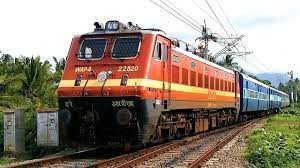
The Union Budget 2024-25, presented by Nirmala Sitharaman in Parliament today, marks a historic allocation for the Railways with a record Capex of Rs 2,62,200 crore. The Gross Budgetary Support for Railways in FY 2024-25 is set at Rs 2,52,200 crore, a substantial increase from previous years. For context, the Gross Budgetary Support was Rs 2,40,200 crore in 2023-24, which had seen a dramatic rise from Rs 28,174 crore in 2013-14.
Ashwini Vaishnaw noted that the infusion of capital expenditure has already yielded significant results. The Indian Railways achieved an all-time high freight loading of 1,588 MT in FY 2023-24, up from 1,095 MT in 2014-15, with a target of reaching 3,000 MT by 2030. Additionally, the Railways achieved record total receipts of Rs 2,56,093 crore in 2023-24, generating a net revenue of Rs 3,260 crore to further supplement Capex.
In a press conference later in the day, Vaishnaw expressed his gratitude to Prime Minister Modi and Finance Minister Sitharaman for the unprecedented allocation. He highlighted that significant funds have been earmarked for safety-related activities within the Railways, ensuring continued improvements in passenger safety and infrastructure.
Over the past decade, the Railways have commissioned 31,180 track kilometers, increasing the pace of track laying from 4 km per day in 2014-15 to 14.54 km per day in 2023-24. Furthermore, Indian Railways has electrified 41,655 Route Kilometers (RKMs) during 2014-2024, compared to 21,413 RKMs until 2014.
This year’s budget also includes additional funds to promote industrial development. These funds will support essential infrastructure for developing industrial clusters at strategic nodes: Kopparthy on the Vishakhapatnam-Chennai Industrial Corridor, Orvakal on the Hyderabad-Bengaluru Industrial Corridor in Andhra Pradesh, and Gaya on the Amritsar-Kolkata Industrial Corridor in Bihar. This initiative aims to catalyze industrial growth in the eastern region of India.
Railways have adopted a new approach for infrastructure development, identifying three Economic Railway Corridors—Energy, Mineral, and Cement corridors (192 Projects); Port Connectivity Corridors (42 Projects); and High Traffic Density Corridors (200 Projects) under the PM Gati Shakti Mission. These corridors are designed to enable multi-modal connectivity, enhance capacity, decongest high-density networks, reduce logistics costs, and improve passenger experience and safety.
Bhubaneswar: Odisha has taken a significant lead in India’s clean energy transition by becoming the…
Bhubaneswar: In a major step towards planned urban expansion, the Bhubaneswar Development Authority on Tuesday…
Bhubaneswar: The “Bamboo Forward Summit — From Ground to Growth” was successfully organised, bringing together…
Bhubaneswar: ParibhaAsha HeritEdge Lab has launched Ekamra Anubhav 2.0, a reimagined edition of its heritage…
Bhubaneswar: Responding to mounting criticism and political consensus, the Odisha government has begun the process…
Bhubaneswar: The inaugural edition of the National Indoor Athletics Championships concluded on a high note…