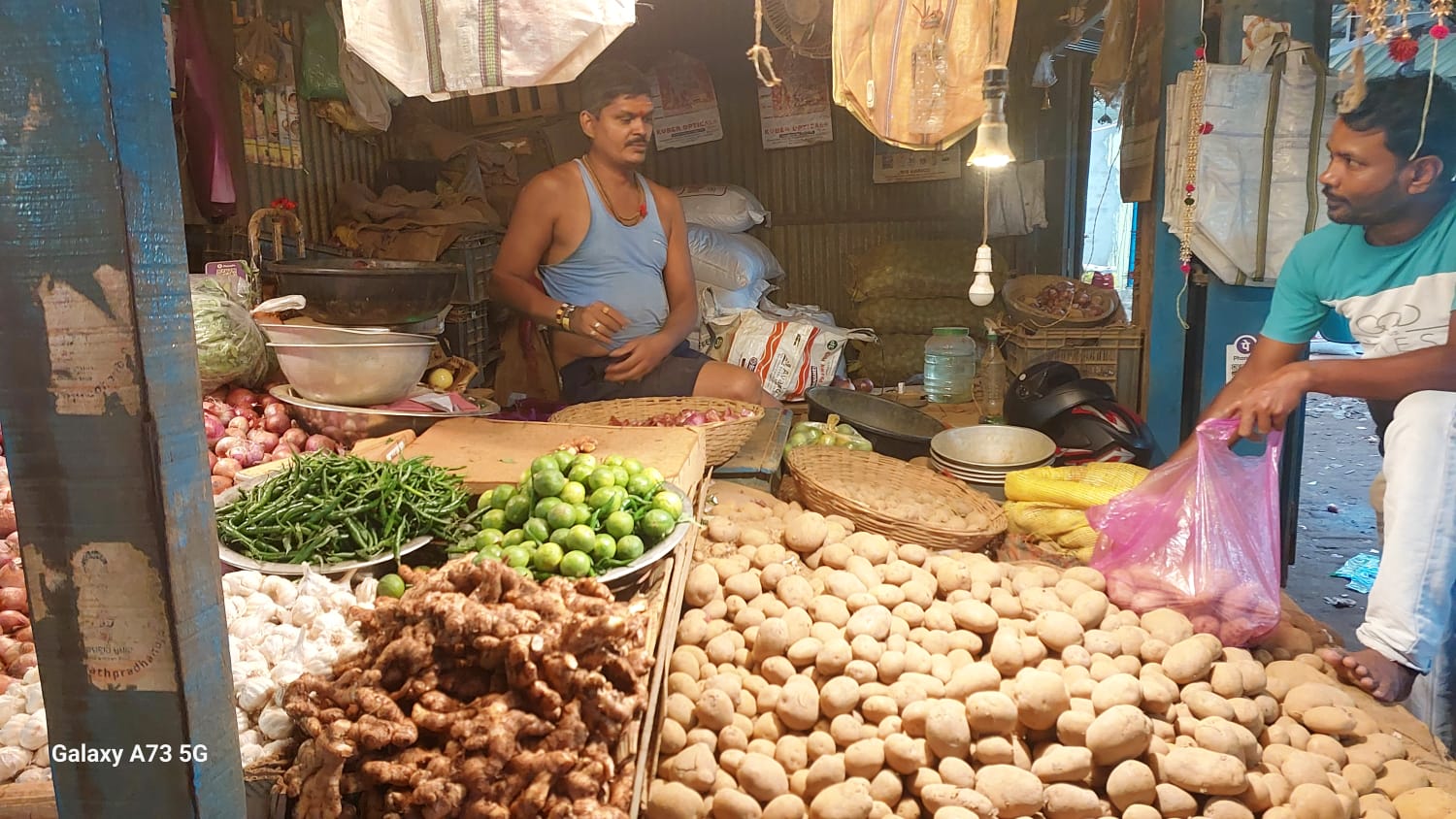
As Cyclone Dana approaches the eastern coast of India, Odisha is witnessing a surge in panic buying, resulting in sharp price hikes for essential vegetables like potatoes and onions. The India Meteorological Department (IMD) has predicted a severe cyclonic storm likely forming from a low-pressure area over the Bay of Bengal by October 24 or 25. With this warning, local markets in Odisha have been flooded with anxious consumers, leading to shortages of critical goods.
This surge in buying is familiar for Odisha, a state with a history of devastating cyclones. Disaster preparedness has become second nature for the residents of the cyclone-prone coastal districts. As soon as a cyclone alert is issued, people rush to stock up on essential commodities. The sight of crowded marketplaces with buyers scrambling to purchase potatoes, flour, onions, and flattened rice is all too common, as many fear these items will vanish from store shelves.
The fear of shortages is one of the main psychological triggers behind panic buying. People of Odisha, who have faced numerous cyclones like Phailin in 2013, Hudhud in 2014, Titli in 2018, Fani in 2019, Amphan in 2020, Yaas in 2021, and Asani in 2022, understand all too well how these natural disasters can disrupt supply chains. The frequent encounters with these powerful storms over the past two decades have ingrained a deep sense of urgency among the people, prompting them to stockpile essentials before a cyclone hits, driven by memories of past shortages and logistical breakdowns.
The domino effect plays a significant role in driving this behaviour. When a few individuals start rushing to buy supplies, it sets off a chain reaction. As others witness this urgency, they feel compelled to do the same, fearing they might miss out on essentials. This behaviour quickly spreads, even reaching those who hadn’t initially intended to stockpile. The anxiety builds with each person who joins the rush, amplifying the sense of scarcity and urgency, often fueled by past experiences with disasters and the memory of how quickly supplies can run out. The memory of the 1999 Super Cyclone and other catastrophic storms is deeply rooted, reminding people of the shortages they endured, prompting them to overprepare to avoid facing similar hardships again.
While panic buying may seem like a logical precaution, it often has unintended consequences. Prices for essential commodities have already surged in Odisha’s markets as Cyclone Dana looms. Potatoes and onions have seen significant price hikes, and local officials have been ordered to raid markets for illegal hoarding to control prices. Unfortunately, this behaviour disproportionately affects daily wage workers and those with limited means, leaving them struggling to secure basic necessities.
The tendency to stock up on essentials is not just a reaction to the immediate cyclone threat but a culturally ingrained survival mechanism. People living in Odisha’s coastal districts have adapted to recurring natural disasters by making panic buying part of their preparedness strategy. With 14 districts on high alert, residents are taking matters into their own hands, preparing themselves without waiting for government relief efforts.
The government plays a crucial role in managing panic buying during cyclone situations. In response to the rising complaints of hoarding and black-marketing of essential commodities, Food Supplies and Consumer Welfare Minister Krushna Chandra Patra recently engaged in discussions with traders’ associations. To combat illegal hoarding, officials have been ordered to raid markets, ensuring that essential goods remain accessible and fairly priced.
Additionally, the state government has set up a dedicated telephone number, 0674-2396227, for residents to report traders who are charging exorbitant prices in light of Cyclone Dana. This proactive approach aims to protect consumers and maintain stability in the markets during this challenging time. Strengthening public trust in the government’s disaster preparedness and relief plans will also help ease anxiety and reduce the urge to stockpile supplies.
As Odisha braces for Cyclone Dana, the cycle of panic buying has resurfaced, driven by fear, uncertainty, and memories of past experiences. While preparation is crucial, overbuying only leads to shortages, affecting the most vulnerable. Understanding the psychological factors behind panic buying and implementing strategies to manage it will be key in ensuring that essential goods remain accessible to everyone during the storm.
Kolkata: Rugby India has named a 13-member Senior Women’s Rugby Sevens squad for the Aichi-Nagoya…
Kakamigahara, Japan: India continued their dominant run at the Asian Games 2026, crushing Indonesia 17-1…
Kakamigahara, Japan: India goalkeeper Savita Punia has become the most-capped player in the history of…
Dhenkanal: A trail through the hills of Dhenkanal took heritage enthusiasts to Tapoban, a site…
Bhubaneswar: Six southern Odisha districts are set to get a new platform for rural development…
Bhubaneswar: Hospitals and health facilities across Odisha are being readied to handle emergencies and maintain…
