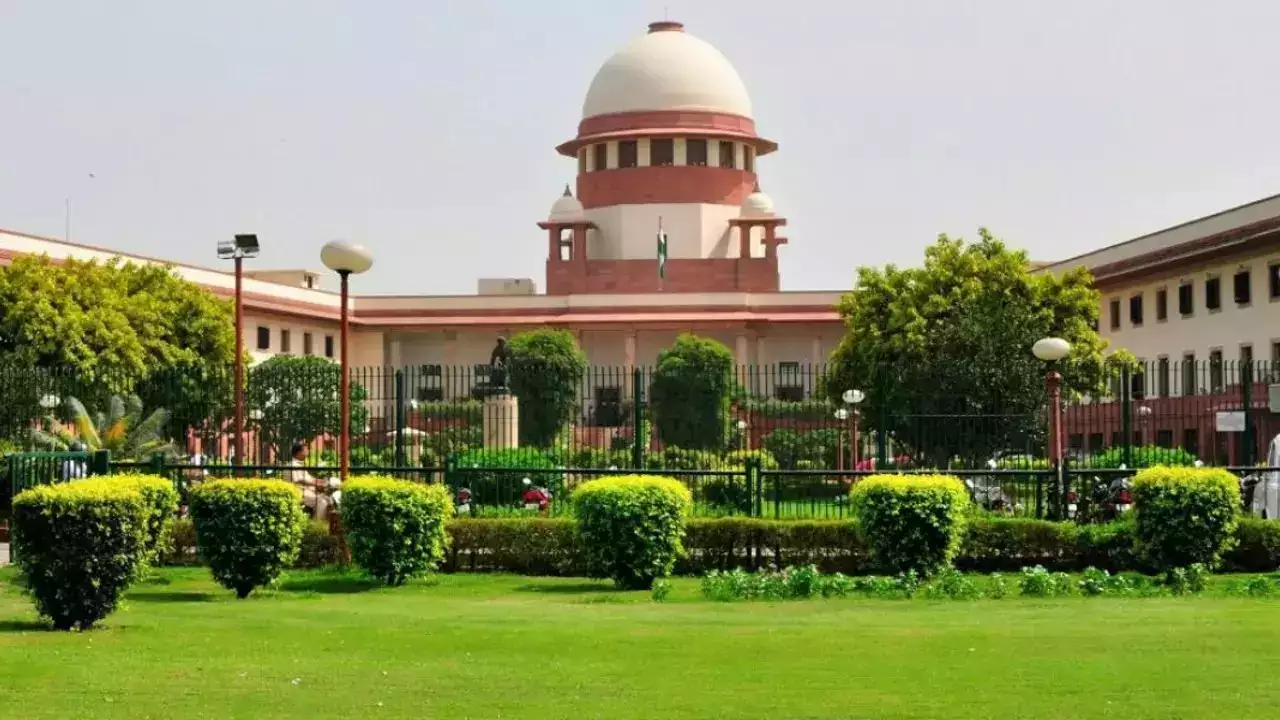
Supreme Court Strikes Down Electoral Bonds Scheme, Citing Violation of Right to Information
New Delhi: In a landmark decision, the Supreme Court of India has extended the ambit of Articles 14 and 21 of the Constitution to encompass the “right against the adverse effects of climate change,” recognizing the critical importance of environmental protection in safeguarding fundamental rights.
A three-judge bench led by Chief Justice of India D Y Chandrachud highlighted the constitutional provisions emphasizing environmental protection, including Article 48A’s mandate for the State to protect and improve the environment and Article 51A(g), which assigns every citizen the duty to preserve and enhance the natural environment. While acknowledging that these provisions are not directly enforceable, the bench underscored their significance in interpreting broader constitutional rights.
The bench emphasized, “Article 21 recognizes the right to life and personal liberty, while Article 14 indicates that all persons shall have equality before the law and equal protection of laws. These Articles are important sources of the right to a clean environment and the right against the adverse effects of climate change.”
The ruling, issued on March 21, 2024, and detailed subsequently, underscores the judiciary’s commitment to addressing the adverse impacts of climate change despite the absence of specific legislative measures. The court noted the absence of comprehensive legislation pertaining to climate change in India but affirmed that citizens possess inherent rights against its detrimental effects.
The judgment articulated the inseparable link between environmental degradation and fundamental rights, particularly the right to life and health under Article 21. It elucidated that environmental pollution, climate-related health hazards, and ecological disruptions compromise the realization of these rights, disproportionately affecting marginalized communities.
The case before the bench concerned a petition advocating for the protection of the Great Indian Bustard (GIB) from habitat loss due to power transmission lines, illustrating the intersection of environmental conservation and constitutional rights.
The Supreme Court’s decision marks a significant milestone in India’s legal landscape, affirming the constitutional imperative to combat climate change and uphold environmental integrity as indispensable elements of fundamental rights.
Bhubaneswar: From a proposed international airport to the restoration of historic religious sites, Odisha Chief…
Bhubaneswar, October 12: Students across Odisha have showcased their ideas for a developed India through…
Bhubaneswar: More than 170 students and vocational lecturers from Government Vocational Higher Secondary Schools across…
Bhubaneswar: East Coast Railway (ECoR) is expanding its technology-driven security network, with plans to increase…
Bhubaneswar: Odisha’s traditional handloom and handicraft heritage took centre stage at Bhubaneswar Times Fashion Week…
Bhubaneswar: With physical tests for the recruitment of Foresters, Forest Guards and Excise Constables set…