
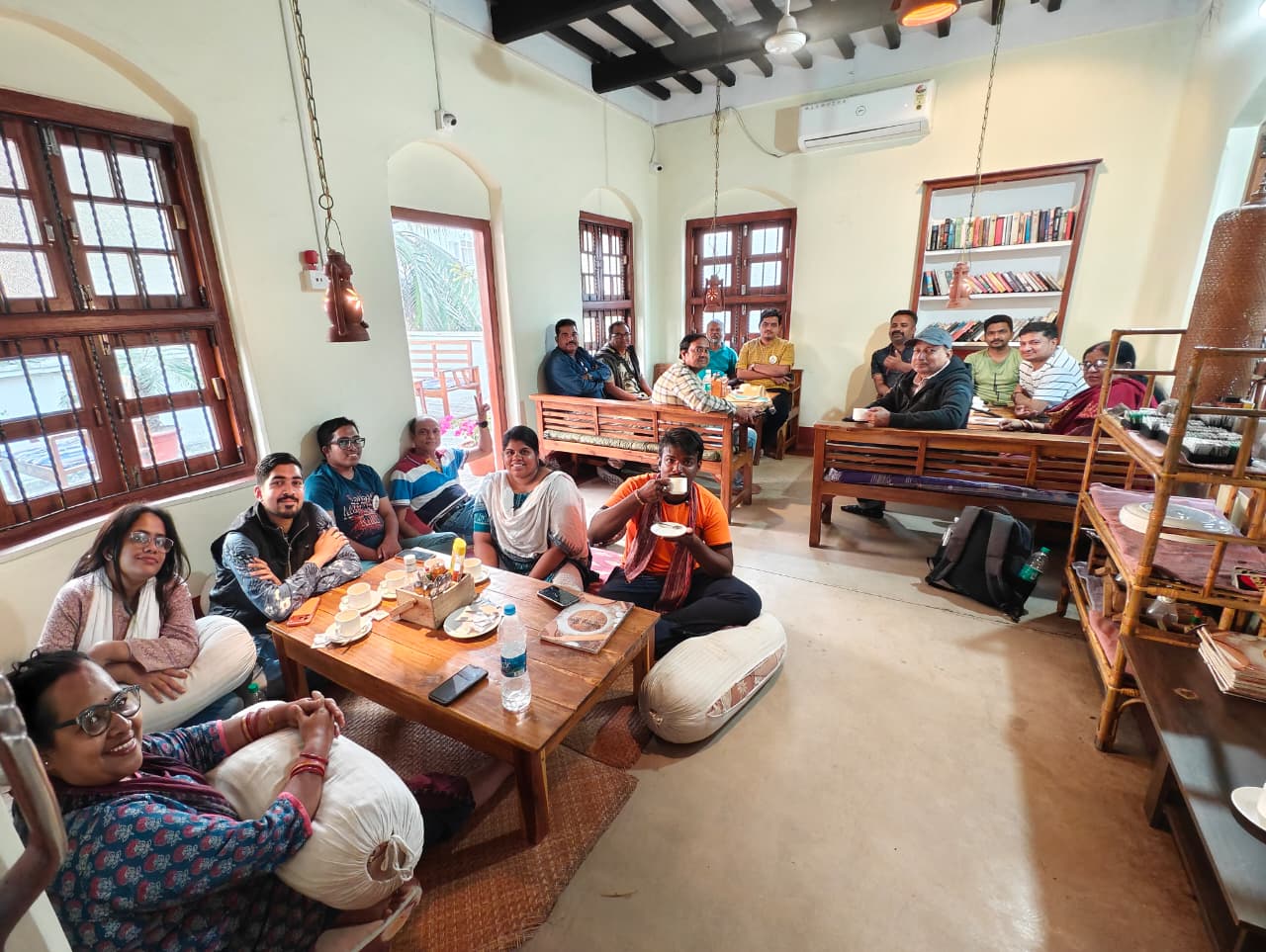
Puri: Revisiting a fascinating chapter of Puri’s cultural and tourism history, over 20 participants of the Puri Heritage Walks (PHW) on Sunday explored Chakratirtha Road (CT Road), once a vibrant hub of international tourism during the 1960s and 1970s. The heritage trail shed light on how the iconic thoroughfare became a magnet for thousands of visitors from the Western world, shaping the social, cultural, and culinary landscape of the holy city.
Curated by heritage expert Prasanta Kumar Mishra, the unique walk titled “International Tourism Trail: CT Road”, organised under the aegis of the 18th edition of PHW, took participants through key locations historically associated with foreign tourists, including heritage buildings, cafés, eateries, and old accommodation hubs.
The walk began near Hotel Bay View and proceeded towards Honey Bee Café, where Mishra narrated stories of how foreign travellers started arriving in Puri around 1960, drawn by its serene atmosphere and spiritual ambience. He explained that most visitors preferred small, affordable hotels along CT Road, which in turn generated livelihoods for local entrepreneurs and transformed the area into a thriving hospitality zone.
Culinary Crossroads
Sharing his personal experiences of interacting with international tourists, Mishra recalled how the influx of Western travellers, especially during the hippie movement of the 1970s, introduced new food cultures to Puri. Tourists from Spain, Italy, Japan, and other countries taught local cooks to prepare international dishes, gradually expanding the city’s culinary offerings.
Participants heard engaging anecdotes on how global dishes such as spaghetti, pasta, burgers, and toasts became popular in local cafés. Mishra also recounted the evolution of the Japanese dish “Omu Rice” into the locally adapted “Om Rice,” a now familiar item on Puri’s menus.
The group also explored open-air eateries like Bamboo Restaurant and Shambhu Restaurant, which once catered extensively to foreign guests. Stories of foreign women settling in Puri after marrying locals and establishing restaurants added a personal dimension to the trail. PHW coordinator Dr. Kumar Aurojyoti supplemented the walk with his own recollections of the era.
Tracing Heritage and Global Links
As part of the walk, participants visited a Kashmiri handicrafts shop that once attracted foreign tourists, Harris Café, and several heritage structures, including Madhupur Kothi, the former palace residence of the Queen of the Madhupur princely state, located along the beach. At Z Hotel, the group viewed its nearly century-old building, followed by a visit to the Pink House Restaurant, where the old café space still stands intact.
Japanese Cultural Flavour
Adding an international cultural dimension, participants later attended the Odisha–Japan Festival at Talabania, witnessing Japanese cultural performances, sampling Japanese cuisine, and interacting with visitors from Japan. The experience offered a fitting conclusion to the trail themed around global connections.
However, the walk also sparked reflections on the decline of international tourism along CT Road. Participants observed that rapid, unplanned urban development and increasing congestion have eroded the area’s earlier charm, prompting local businesses to shift focus largely towards domestic tourists.
Among those who took part were PHW co-coordinator Ashoka Manjari Nayak, Programme Director Biswaranjan Dehury, and heritage enthusiasts Jyotsna Mohapatra, Rajashree Sahoo, Mahasweta Basu, Hitesh Seth, Taranisen Pattanaik, Subrata Kumar Bal, Benudhar Biswal, Tanmaya Chatterjee, Biswa Shanti Tripathy, Rajeswar Mohanty, Priyankar Maharana, Jinod Mohanty, Biswamohan Sahoo, Siddhartha Mohapatra, and Sai Shivakumar, among others.
The heritage walk offered a nostalgic yet critical lens into Puri’s cosmopolitan past, underscoring the need to preserve its unique cultural legacy amid rapid urban change.