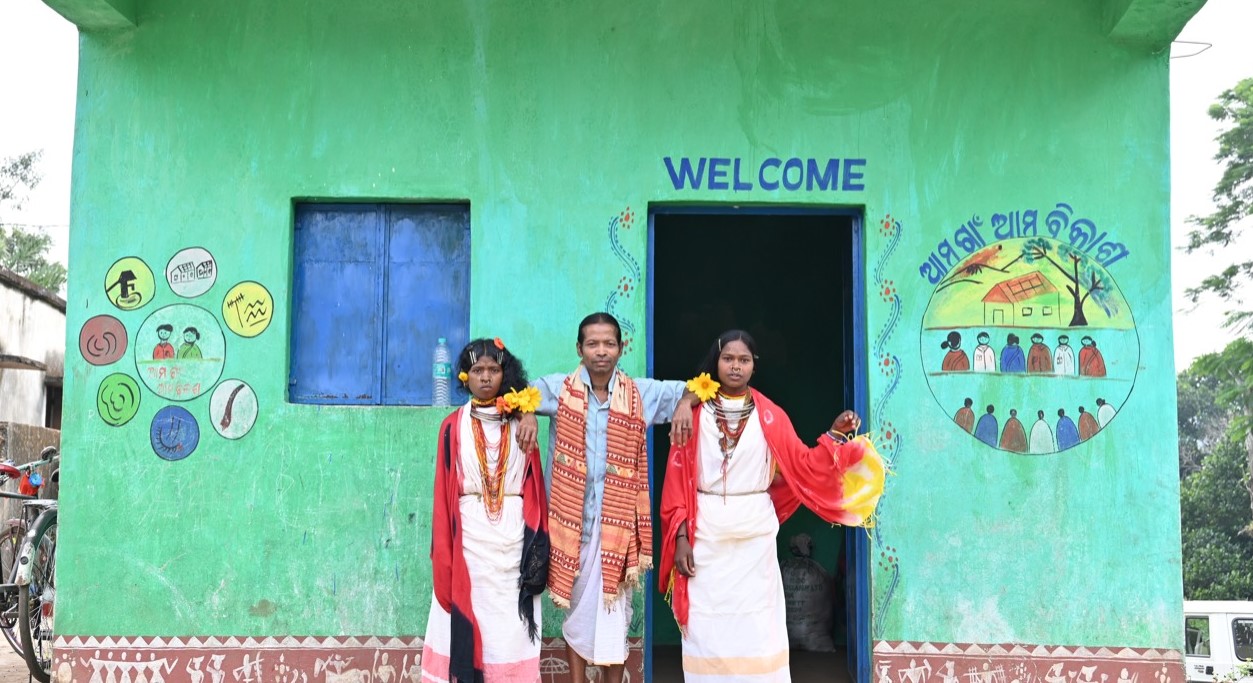
Bhubaneswar: For the systematic tracking of the schemes, projects and various programmes carried out at various Gram Panchayats across the state, the Poverty & Human Development Monitoring Agency (PHDMA), the apex M&E body of the Odisha Government will monitor 6794 Gram Panchayats till 2 October 2023 under the Governance Atlas initiative.
In the first phase of the initiative, PHDMA would bring out the Panchayat level Governance Atlas of 4056 GPs through the on-site Deep Sensing and Immersion method. The report will be completed by March 5, 2023 (Panchayati Raj Dibasa).
Governance Atlas initiative is a systematic tracking of access, availability, and utility of priority schemes, projects, programmes, and benefits at household, individual, cohort, sectoral and institutional levels as well as capturing of people’s aspirations from all gram panchayats to triggering a robust redressal mechanism.
All the inputs collected under Governance Atlas will be shared with stakeholders for resolution and necessary policy actions and inputs.
Over one year, the PHDMA team members will visit all the gram panchayats to see, listen and understand what’s working, what needs to be worked on, and what the people of Odisha aspire to.
The project is excepted to keep track of progress happening on the ground and ensure capturing of positive deviance.
Sharing about the initiative, Roopa Roshan Sahoo, Member Secretary, PHDMA said, “It’s our way to participate in processes of poverty eradication towards human development through listening. Deep listening will not be about hearing words but to embrace, accept, and resolve. Through the tool of trust will emerge a leader- an Emergent Convergent leader. The lived experience is about me, and the narratives will tell what numbers don’t. The compilations of governance realities through narratives, immersive observations, and pictures on the ground will be the governance atlas of the state.”
“PHDMA has a unique way of collecting narratives and visuals from the field which ensures going beyond a structural format and traditional methods of monitoring and evaluation”, she added.
The narrative collected under the continuous monitoring also referred to as ‘The Mycelium Way’ from the people of Odisha, would help to prepare reports on what works for the people, what needs to be done, and what they aspire to.
These observations will provide a detailed analysis of the progress of governance in the state and will help the administration track growth of individuals, households, and communities.
Bhubaneswar: East Coast Railway (ECoR) is expanding its technology-driven security network, with plans to increase…
Bhubaneswar: Odisha’s traditional handloom and handicraft heritage took centre stage at Bhubaneswar Times Fashion Week…
Bhubaneswar: With physical tests for the recruitment of Foresters, Forest Guards and Excise Constables set…
Bhubaneswar: Adapting government communication to the rapidly evolving digital and artificial intelligence (AI) landscape while…
Bhubaneswar: Olympian hockey player and East Coast Railway (ECoR) Sports Officer Amit Rohidas was felicitated…
Bhubaneswar: In a major push to expand egg production and attract investment in the poultry…