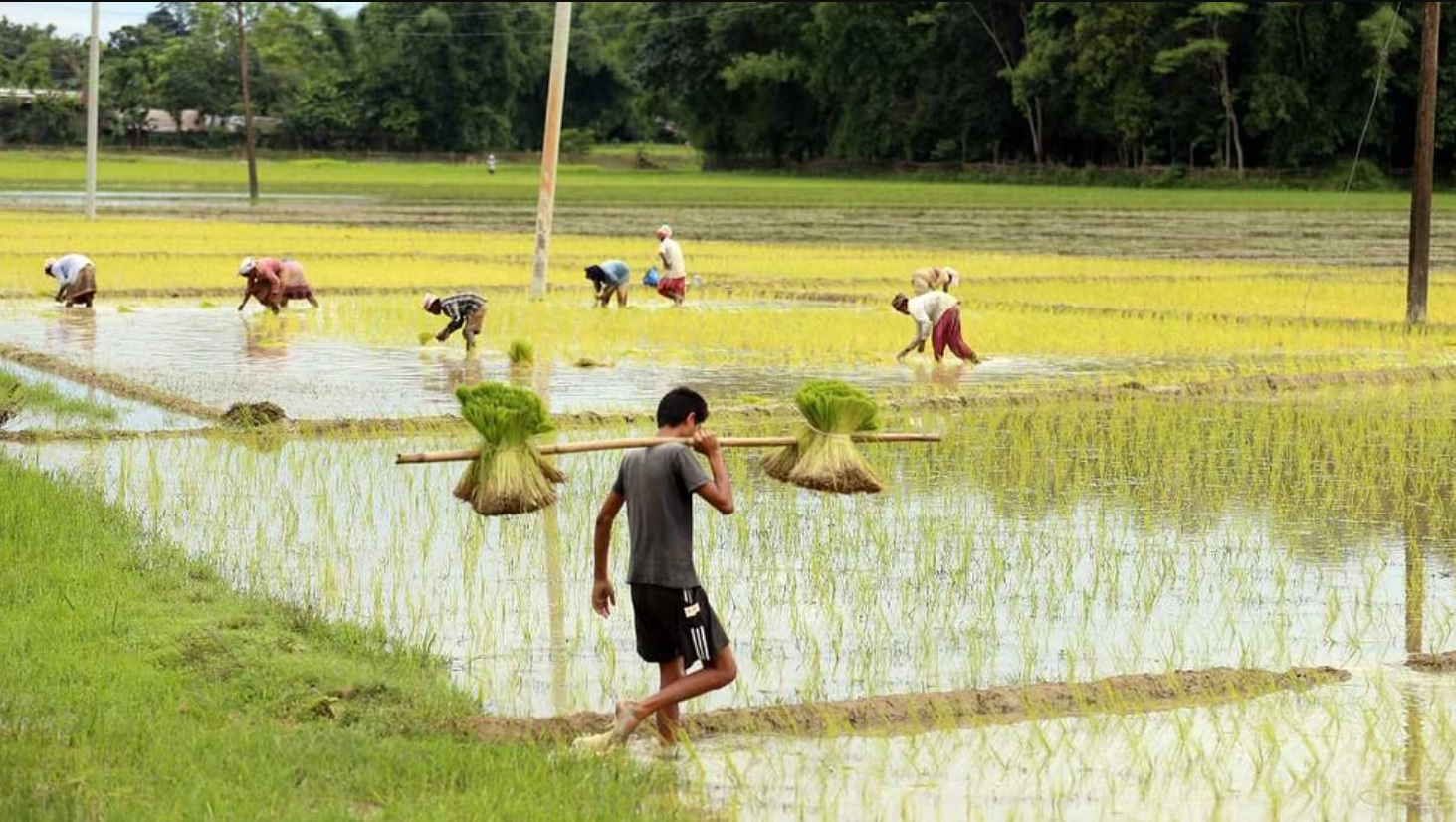
Bhubaneswar: In an effort to enhance agricultural productivity and utilize fallow lands efficiently, the Odisha government has set an ambitious target of covering 4 lakh hectares of farmland under the “Comprehensive Project on Rice Fallow Management” program for the fiscal year 2023-24.
Prem Chandra Chaudhary, Director of Agriculture and Food Production, chaired a review meeting with implementing agencies to assess the progress of the initiative. Emphasizing transparency and adherence to timelines, Chaudhary urged a concerted effort to meet the set target.
During the meeting, it was disclosed that more than 2.85 lakh hectares have already been brought under the program, with ongoing crop sowing activities. The entire process is undergoing digitization and documentation, incorporating a monitoring mechanism utilizing remote technologies.
The program, previously implemented across approximately 70,000 hectares in 30 districts during the 2022-23 fiscal year, focuses on utilizing rice fallow areas for cultivating non-paddy crops, particularly pulses and oilseeds, aiming to bridge the deficit in these crops.
With around 16 lakh hectares of rice fallow land available, 10 lakh hectares have the potential for cultivation during the Rabi season, emphasizing short-duration, water-efficient pulses, and oilseeds.
To optimize fallow land utilization, the government plans to expand interventions through a state-wide demonstration program involving pulses and oilseeds. The targeted crops include Green gram, Black gram, Field Pea, Bengal Gram, Lentil, Grass Pea, Mustard, and Sesamum.
The primary goals of the project include harnessing residual soil moisture, increasing cropping intensity, promoting pulses and oilseeds cultivation, enhancing food production with efficient water usage, restoring soil health, and supporting farmers’ livelihoods and nutritional security.
Various stakeholders, including the Directorate of Agriculture and Food Production, CGIAR, and other nationally reputed institutions, as well as seeds and agri-inputs supplying agencies like OSSC, OAIC, NRRI, IICT, and CBOs, are actively involved in the project’s implementation.
Following the signing of MoUs with five implementing agencies, including IRRI Consortium, ICRISAT, MSSRF, KVSS, and AFC India Limited for the Rabi 2023-24 phase, on-ground activities have commenced. The approved interventions involve providing farmers with essential inputs such as quality seeds, bio-fertilizers, micro-nutrients, weedicides, and IPM devices to achieve higher productivity.
Bhubaneswar: Recognising their gold medal-winning performances at the 2026 Asian Games in Japan, Odisha Chief…
Bhubaneswar: Two school-going sisters from Odisha have used a multiplication table to deliver a social…
Bhubaneswar: The Satwalipi Committee on Mahaprabhu Lingaraj Temple has submitted its third interim report to…
Bhubaneswar: Odisha will organise a state-level summit to finalise priorities and accelerate the implementation of…
Bhubaneswar: The Housing and Urban Development Department has asked Urban Local Bodies (ULBs) across Odisha…
Bhubaneswar: From exploring ancient temples and the story of Odisha’s capital city to discovering local…