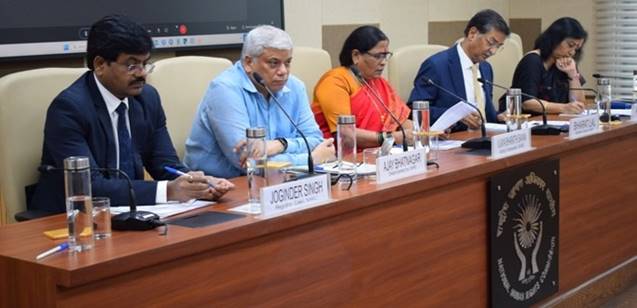
New Delhi: The National Human Rights Commission (NHRC), India, concluded an Open House Discussion aimed at improving the human rights situation for the children of sex workers and marginalized communities. The hybrid event, held at the NHRC premises, brought together a diverse group of stakeholders, including policymakers, educators, NGOs, and civil society members, to address the systemic challenges these children face and propose actionable solutions for their betterment.
S. Vijaya Bharathi, Acting Chairperson of the NHRC, chaired the discussion, underscoring India’s rich cultural heritage that traditionally values child protection. Despite various constitutional provisions and child protection laws, she emphasized that children from marginalized communities still face numerous challenges, including stigma, poverty, and limited access to education and healthcare. She called for collective action from all sectors to ensure equitable access to resources and opportunities for these vulnerable children.
In his opening remarks, Bharat Lal, Secretary General of NHRC, highlighted the fundamental importance of education and healthcare for children from vulnerable communities. He acknowledged the government’s initiatives, such as the Eklavya Model Residential Schools, which aim to enhance educational access for tribal children. He, however, pointed out the persistent challenges in bridging the disparities in services and opportunities for marginalized children, particularly those in geographically remote areas.
Anita Sinha, Joint Secretary of NHRC, provided an overview of the discussion, focusing on the specific issues faced by the children of sex workers and marginalized communities. She emphasized that these children often endure social stigma, limited access to basic services, and increased vulnerability to exploitation. She highlighted the need for supportive environments to aid in their development and discussed the NHRC’s ongoing efforts to address these concerns.
The Open House was divided into two sessions. The first session concentrated on the rights of children of sex workers, exploring their unique challenges and advocating for improved access to education and healthcare. The second session focused on the children of marginalized communities, addressing the barriers they face in accessing essential services.
Some of the key recommendations that emerged during the discussion included:
The event also included a detailed presentation of NHRC’s field visits and active engagements in schools and childcare institutions, where technology was identified as a key tool in providing equitable educational access to children from NT/DNT (Nomadic and Denotified Tribes) communities.
The discussion was attended by a number of prominent participants, including Ajay Bhatnagar, Director General (Investigation) NHRC, Meenakshi Negi, Member Secretary of the National Commission for Women (NCW), Prof. Asha Bajpai of Tata Institute of Social Sciences, and Prabhat Kumar, Child Protection Specialist at UNICEF, among others.
This Open House marks a significant step toward advancing the rights of vulnerable children and underscores the NHRC’s ongoing commitment to fostering inclusive development and promoting human rights for all, especially the most marginalized.
Bhubaneswar: Strengthening institutional mechanisms and improving coordination among States have emerged as key priorities at…
Bhubaneswar: The Odisha government conducted an additional round of centralised online student allotment under the…
Bhubaneswar: Bhubaneswar is set to host the first Shakti Summit – State WCD Leadership Conclave…
Bhubaneswar: The Odisha Health Department has intensified epidemiological and laboratory surveillance following reports of a…
Bhubaneswar: The flood situation in Odisha has begun to ease, with most affected areas witnessing…
Bhubaneswar: The Odisha government is stepping up efforts to make the upcoming Kalibeti and Mudamba…