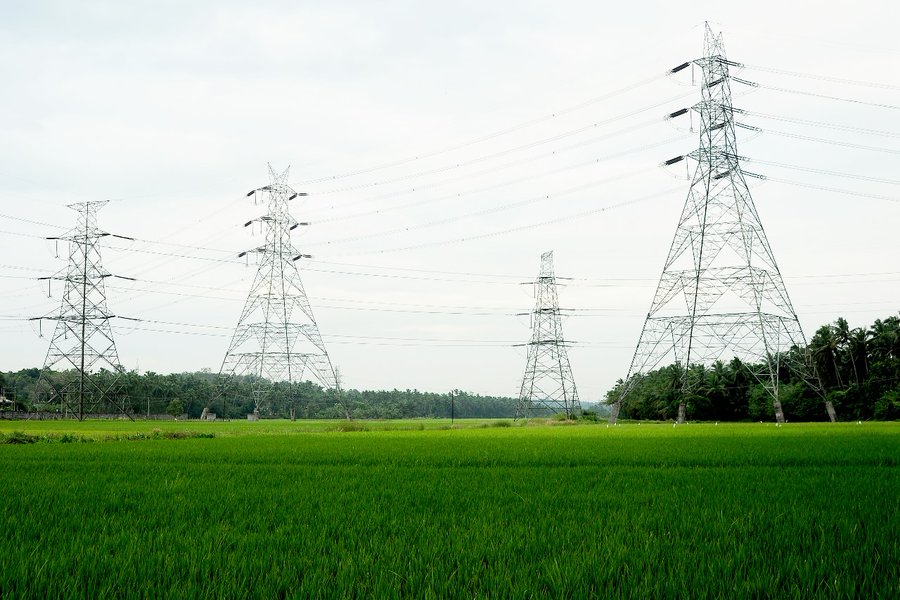
New Delhi: India now boasts one of the largest unified electricity grids globally, with an impressive inter-regional transfer capacity of 1,18,740 megawatts (MW), according to the Economic Survey 2023-24. The survey was presented by Union Minister of Finance and Corporate Affairs, Nirmala Sitharaman, in Parliament today.
The country’s transmission systems have significantly expanded, reaching 4,85,544 circuit kilometers of transmission lines and a transformation capacity of 12,51,080 mega volt amps (MVA) as of March 31, 2024. This robust infrastructure supports India’s growing electricity demands, which saw a 13 percent peak increase to 243 GW in FY24.
Electrification Milestones
Since the launch of the Saubhagya scheme in October 2017, a remarkable 2.86 crore households have been electrified under various initiatives. Additionally, the implementation of the Electricity (Late Payment Surcharge and Related Matters) Rules, 2022, has provided much-needed relief to DISCOMs, electricity consumers, and generating companies, helping stabilize the sector.
Renewable Energy Sector
India has made substantial strides in renewable energy, aligning with its commitment under the United Nations Framework Convention on Climate Change to achieve around 50 percent cumulative electric power installed capacity from non-fossil fuel-based energy resources by 2030. The Ministry of New and Renewable Energy is spearheading efforts to reach 500 GW of installed electricity capacity from non-fossil sources by 2030.
As of March 31, 2024, India has installed a total of 190.57 GW of renewable energy capacity, making up 43.12 percent of the total installed generation capacity. This progress is part of a broader clean energy sector that attracted ₹8.5 lakh crore in new investments between 2014 and 2023. Looking forward, the sector is expected to draw about ₹30.5 lakh crore in investments between 2024 and 2030, generating substantial economic opportunities across the value chain.
Future Projections
According to the National Electricity Plan of the Central Electricity Authority, non-fossil fuel-based capacity (hydro, nuclear, solar, wind, biomass, small hydro, pump storage pumps) currently stands at 203.4 GW, which is 46 percent of the total 441.9 GW installed capacity for 2023-24. This figure is projected to rise to 349 GW (57.3 percent) by 2026-27 and 500.6 GW (64.4 percent) by 2029-30.
India’s continued investment and expansion in renewable energy not only support its climate goals but also promise a more sustainable and economically vibrant future.
Bhubaneswar: Showcasing key reforms and administrative milestones achieved over the past two years, the Odisha…
Bhubaneswar: Seeking to align official place names with Odisha’s linguistic traditions and historical identity, the…
Bhubaneswar: Odisha Chief Minister Mohan Charan Majhi on Friday announced that the state government will…
Bhubaneswar: In a push to strengthen urban mobility and support Bhubaneswar’s expanding infrastructure needs, Chief…
Bhubaneswar: With a renewed focus on child rights and protection, the Odisha government on Thursday…
Bhubaneswar: In a major policy intervention aimed at resolving long-pending property registration issues, the Odisha…
