India Achieves Historic Milestone as Prime Minister Witnesses Commencement of Core Loading at Indigenous Fast Breeder Reactor
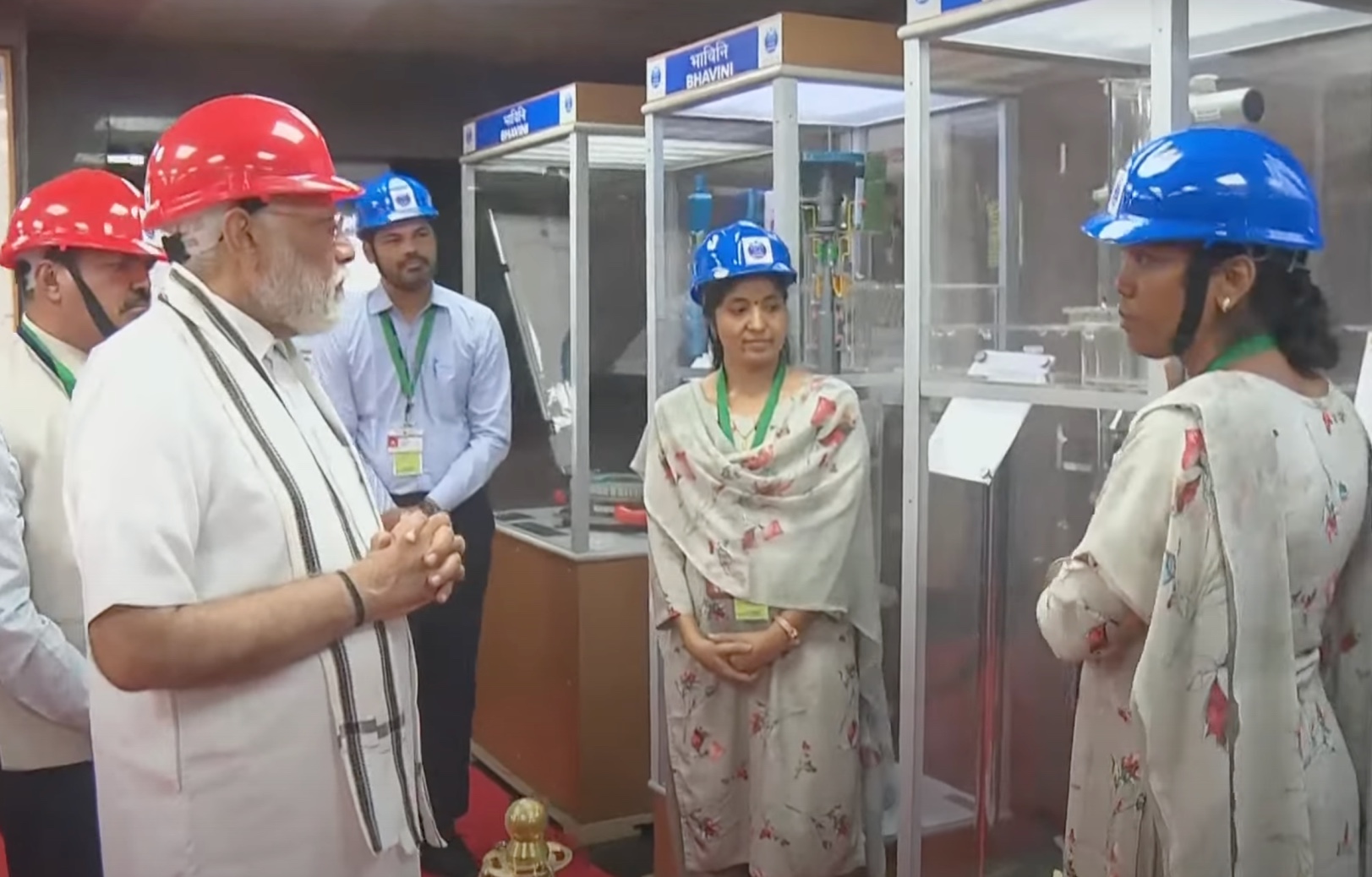
Kalpakkam: Marking a significant stride in India’s three-stage nuclear program, Prime Minister Narendra Modi witnessed the commencement of “Core Loading” at India’s first indigenous Fast Breeder Reactor (500 MWe) today in Kalpakkam, Tamil Nadu.
The Prime Minister undertook a comprehensive tour of the Reactor Vault and the Control Room, where he was briefed about the distinctive features of this pioneering reactor. India, having developed comprehensive capabilities across the entire spectrum of the nuclear fuel cycle, has now entered the vital second stage of its ambitious nuclear program.
The Government, in 2003, approved the creation of Bhartiya Nabhikiya Vidyut Nigam Ltd (BHAVINI) to construct and operate India’s most advanced nuclear reactor, the Prototype Fast Breeder Reactor (PFBR). In alignment with the spirit of Aatmanirbhar Bharat (self-reliant India), the PFBR has been entirely designed and constructed indigenously by BHAVINI, with significant contributions from over 200 Indian industries, including MSMEs. Once commissioned, India will be only the second country, after Russia, to boast a commercially operating Fast Breeder Reactor.
The Fast Breeder Reactor (FBR) will initially use Uranium-Plutonium Mixed Oxide (MOX) fuel. The Uranium-238 “blanket” surrounding the fuel core will undergo nuclear transmutation to produce more fuel, earning the name ‘Breeder.’ This stage also envisions the use of Thorium-232 as a blanket, which, through transmutation, will create fissile Uranium-233 for use as fuel in the third stage. The FBR serves as a crucial stepping stone for the third stage of the program, paving the way for the full utilization of India’s abundant thorium reserves.
In terms of safety, the PFBR is an advanced third-generation reactor with inherent passive safety features, ensuring a prompt and secure shutdown in the event of an emergency. Additionally, using spent fuel from the first stage offers a significant advantage by reducing nuclear waste generation, thereby eliminating the need for large geological disposal facilities.
Upon completion of the core loading, the reactor will achieve its first approach to criticality, leading to subsequent power generation. Remarkably, despite the advanced technology involved, both the capital cost and per-unit electricity cost are comparable to other nuclear and conventional power plants.
The growth of the Indian nuclear power program is crucial to meeting the twin goals of energy security and sustainable development. As a responsible nuclear power with advanced technology, India remains committed to expanding the peaceful applications of nuclear technology in both power and non-power sectors, ensuring the security of nuclear and radiological materials.
New Delhi: President Droupadi Murmu on Wednesday attended the award ceremony of the 65th National…
New Delhi: Union Agriculture and Farmers’ Welfare Minister Shivraj Singh Chouhan has called for developing…
Bhubaneswar: Odisha Chief Secretary Anu Garg has called for expanding livelihood opportunities for rural families…
Bhubaneswar: Odisha Chief Secretary Anu Garg has directed all concerned departments and District Collectors to…
Bhubaneswar: Higher secondary schools across Odisha must install CCTV cameras in examination halls and other…
Cuttack: Remembering police personnel who made the ultimate sacrifice in the service of the nation,…