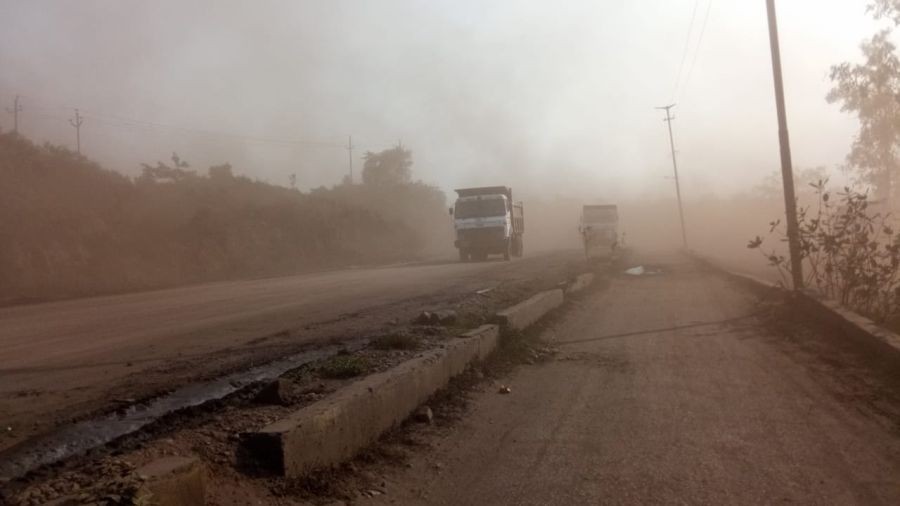
Jodhpur: In a significant breakthrough in understanding and addressing air pollution, a researcher from the Indian Institute of Technology (IIT) Jodhpur has published ground-breaking findings in the prestigious journal Nature Communications. The study provides new insights into the sources and composition of particulate matter (PM) in Northern India, revealing critical information that could shape future mitigation strategies.
The research, led by Dr. Deepika Bhattu, Associate Professor at IIT Jodhpur, challenges the common belief that merely reducing the overall PM mass would effectively alleviate health impacts. Instead, it emphasizes the importance of targeting local inefficient combustion processes, such as biomass and fossil fuel burning, including traffic exhaust, to reduce PM-related health exposure and its associated impacts.
“Our study underscores the need to address local sources of pollution to make a significant dent in air pollution and protect public health,” said Dr. Bhattu. “By focusing on local inefficient combustion processes, we can more effectively reduce the harmful components of particulate matter that affect health.”
The comprehensive study addresses three critical scientific questions essential for Indian policymakers as they devise data-driven, effective mitigation strategies under the ongoing National Clean Air Programme (NCAP):
Fine PM (PM2.5) Source Identification: The research provides unprecedented clarity in identifying the absolute contributions of PM sources, distinguishing between their local and regional geographical origins.
Distinction Between PM Types: For the first time, the study makes a clear distinction between directly emitted PM and those formed in the atmosphere over a large spatial and temporal scale.
Correlating PM Harmfulness: It determines the harmfulness of PM by correlating its oxidative potential with local and regional sources within the study region.
Utilizing advanced aerosol mass spectrometry techniques and data analytics, the study was conducted at five sites across the Indo-Gangetic Plain, both within and outside Delhi. While uniformly high PM concentrations were observed across the region, the chemical composition varied significantly due to the dominance of local emission sources and formation processes.
In Delhi, PM pollution is dominated by ammonium chloride and organic aerosols from traffic exhaust, residential heating, and oxidation products of fossil fuel emissions.
Outside Delhi, the dominant contributors are ammonium sulphate, ammonium nitrate, and secondary organic aerosols from biomass burning vapors.
Regardless of location, the study highlights that organic aerosols from incomplete combustion of biomass and fossil fuels, including traffic emissions, are the primary contributors to PM oxidative potential, which drives PM-associated health effects in the region.
The research also reveals alarming findings about the oxidative potential of Indian PM2.5 compared to other regions. The oxidative potential in Indian cities surpasses that of Chinese and European cities by up to fivefold, marking it as one of the highest globally.
Dr. Bhattu emphasizes the need for collaborative efforts among local communities, stakeholders, and societal changes, particularly in densely populated urban areas like Delhi. “Moving forward, concerted sustainable efforts are needed to promote cleaner energy sources, improve combustion efficiency, and reduce emissions from transportation, especially from outdated, overloaded, and inefficient vehicle fleets,” she said. “Our study provides valuable insights for evidence-based policies and interventions aimed at safeguarding public health and the environment for future generations.”
Bhubaneswar: East Coast Railway (ECoR) is expanding its technology-driven security network, with plans to increase…
Bhubaneswar: Odisha’s traditional handloom and handicraft heritage took centre stage at Bhubaneswar Times Fashion Week…
Bhubaneswar: With physical tests for the recruitment of Foresters, Forest Guards and Excise Constables set…
Bhubaneswar: Adapting government communication to the rapidly evolving digital and artificial intelligence (AI) landscape while…
Bhubaneswar: Olympian hockey player and East Coast Railway (ECoR) Sports Officer Amit Rohidas was felicitated…
Bhubaneswar: In a major push to expand egg production and attract investment in the poultry…