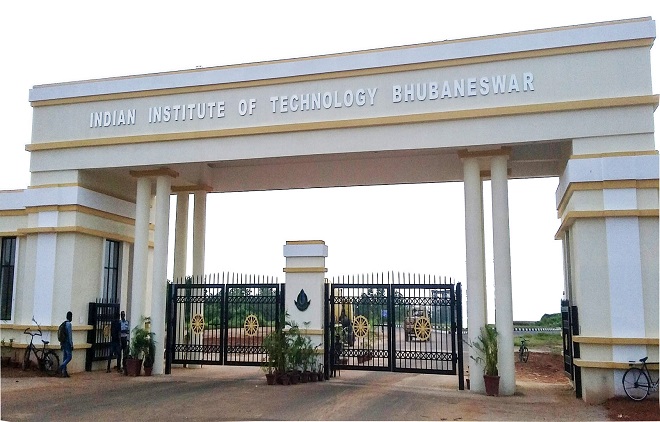
Bhubaneswar: IIT-Bhubaneswar has developed an innovative hybrid technology aimed at significantly enhancing the accuracy of rainfall predictions, particularly in the case of downpours, with an adequate lead time. This breakthrough was achieved by integrating the output from the Weather Research and Forecasting (WRF) model into a deep learning (DL) model, marking a critical advancement in weather forecasting technology.
The research, which was focused on highly vulnerable regions such as Assam and Odisha, was conducted using retrospective cases from June 2023. Assam, known for its complex terrain and susceptibility to severe flooding, and Odisha, where heavy rainfall events are dynamic due to frequent intense monsoon low-pressure systems, served as key areas of study.
“The studies were carried out using retrospective cases over the complex terrain of Assam during June 2023 and over the state of Odisha where heavy rainfall events are highly dynamic in nature due to the landfall of multiple intense rain-bearing monsoon low-pressure systems,” IIT-Bhubaneswar stated on Monday.
The institute claimed that this hybrid model showcased nearly double the prediction accuracy compared to traditional ensemble models, specifically at the district level in Assam, with a lead time extending up to 96 hours. This advancement is particularly significant given the severe flooding Assam experienced between June 13 and 17, 2023, due to heavy rainfall.
“The DL model was able to more accurately predict the spatial distribution and intensity of rainfall at a district scale,” the statement noted. By employing the WRF model to generate initial weather forecasts in real-time, which were then refined using the DL model, the research team achieved a more detailed analysis of rainfall patterns. A spatio-attention module was incorporated to better capture the intricate spatial dependencies in the data, enhancing the accuracy of predictions.
The study, titled ‘Minimization of Forecast Error Using Deep Learning for Real-Time Heavy Rainfall Events Over Assam’, published in IEEE Xplore, highlights the dramatic improvement in forecast accuracy for heavy rainfall events achieved by integrating DL with the traditional WRF model. This advancement is expected to be particularly beneficial for flood-prone mountainous regions like Assam, where accurate and timely weather predictions are crucial.