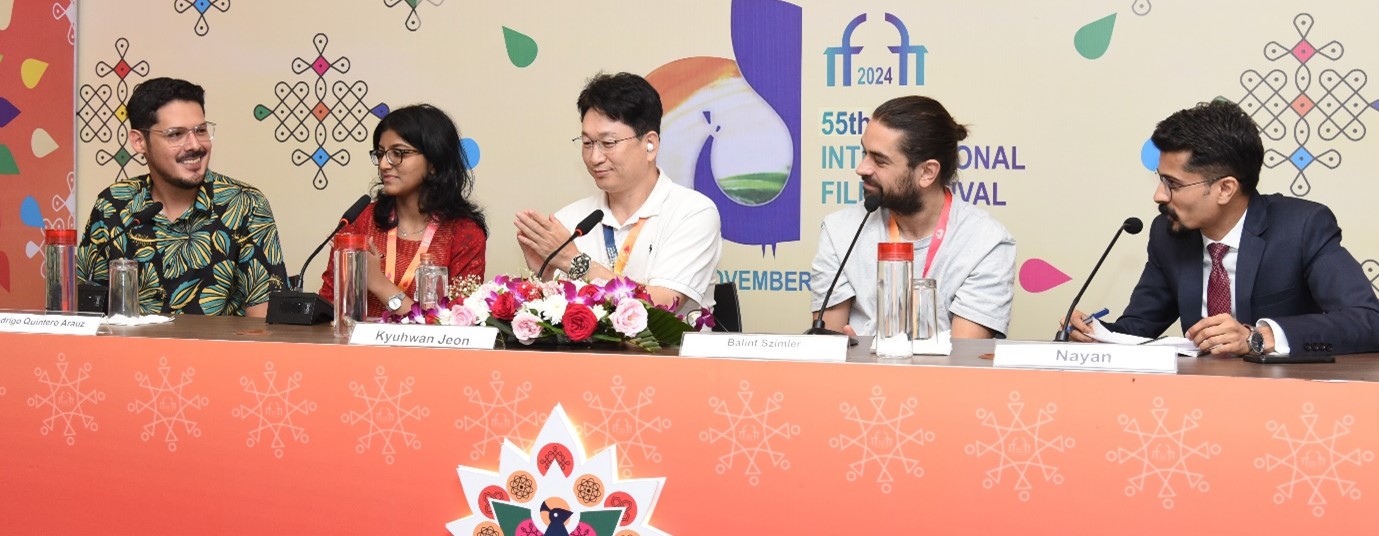
Goa: Three remarkable films from South Korea, Hungary, and Panama enthralled audiences at the 55th International Film Festival of India (IFFI) as part of the prestigious Cinema of the World section. Featuring compelling narratives and unique cultural perspectives, the films—Lost Horse by Kyuhwan Jeon, They Call Me Panzer by Rodrigo Quintero Arauz, and Lesson Learned by Bálint Szimler—received widespread acclaim.
The directors of the films shared insights into their creative journeys during a press conference held at the festival.
South Korean filmmaker Jeon Kyu-hwan’s Lost Horse delves into the struggles of Kim, an elderly man from Jeju Island whose 20 cherished horses mysteriously disappear. Suspecting illegal immigrants of butchering livestock for meat, Kim forms a squad to confront the perpetrators, leading to tense confrontations.
Speaking at the event, Jeon highlighted the challenges faced by independent filmmakers in South Korea. “While K-dramas dominate globally, independent art films struggle for recognition,” he said. Jeon credited OTT platforms for supporting art films, adding, “Festivals like IFFI provide crucial opportunities for filmmakers like me to showcase our work.”
Rodrigo Quintero Arauz’s They Call Me Panzer is a tribute to Rommel Fernández Gutiérrez, a legendary Panamanian footballer whose life was tragically cut short in a car accident at 27. The film explores Rommel’s journey from Panama to global stardom, balancing his family responsibilities while pursuing his dreams.
Rodrigo shared that many who knew Rommel personally, including his sister Jacqueline, contributed to the film. “This is a story of dreams and family love,” he explained. Reflecting on Panama’s film industry, Rodrigo noted the challenges of limited screening opportunities and a small filmmaking community. “With a population of just 4 million, there are hardly 100 filmmakers in Panama,” he added.
Hungarian filmmaker Bálint Szimler’s Lesson Learned, competing for the ICFT-UNESCO Gandhi Medal, examines the pressures of Hungary’s education system through the eyes of Juci, a young teacher challenging outdated methods, and Palkó, a student struggling to adapt.
Bálint, who moved to Hungary from the U.S. as a child, drew from personal experiences. “The oppressive nature of the education system mirrors broader societal issues,” he said. The project, involving 19 producers, was completed in just five months and had its Asia premiere at IFFI.
Each film resonated deeply with festival audiences, addressing universal themes of resilience, societal challenges, and the pursuit of dreams. As IFFI continues to celebrate diverse voices, these cinematic gems reaffirm the power of storytelling in bridging cultural divides and sparking meaningful dialogue.
IFFI 2024 once again solidifies its reputation as a global platform for celebrating the artistry and impact of world cinema.
Bhubaneswar: Odisha has stepped up its disaster preparedness as a weather system over the region…
Bhubaneswar: Odisha has intensified its efforts to tackle drug abuse in six identified narcotics hotspots,…
Bhubaneswar: Bamboo artisans, entrepreneurs and self-help groups in Odisha now have a dedicated marketplace to…
Gurgaon: Shunya Agritech has launched FodrPulse, a free mobile application designed to help hydroponic fodder…
Bhubaneswar: The Bhubaneswar Development Authority (BDA) has opened the online application process for allotment of…
Bhubaneswar: Odisha is looking to make irrigation projects more closely linked with farm production and…