News

High-Level Conference Highlights Vital Role of Telecommunications in Disaster Management

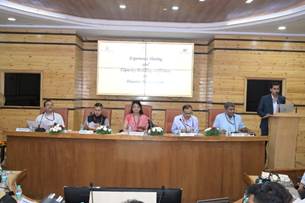
New Delhi: A high-level Capacity-Building Conference on Disaster Management underscored the crucial role of a robust and resilient communication network in managing disasters effectively. Hosted by the Disaster Management Division of the Department of Telecommunications (DoT) in collaboration with the National Telecommunications Institute for Policy Research, Innovation, and Training (NTIPRIT) and License Service Areas (LSA), Delhi, the conference emphasized telecommunications as central to all phases of disaster management—from preparedness and response to recovery and mitigation.

The conference, titled “Experience Sharing and Capacity Building in Disaster Management,” was inaugurated by Madhu Arora, Member (Technology) of DoT, and  Rajendra Ratnoo, Executive Director of the National Institute of Disaster Management (NIDM). The event featured insightful discussions and expert sessions aimed at bolstering disaster preparedness and resilience across India. Notable attendees included Ravi G R, Director General Telecom, and senior officials from various organizations.

Key Insights and Discussions

  • Importance of Telecommunications: With natural disasters like cyclones, floods, landslides, and earthquakes becoming more severe due to climate change, effective communication facilitated by telecom networks is critical for disaster response and recovery. The conference highlighted how telecommunications are integral to maintaining order, saving lives, and ensuring uninterrupted relief operations.
  • Early Warning Systems: In her keynote address, Arora discussed the Combined Alert Protocol (CAP), an early warning system developed by DoT. CAP sends nearly one billion messages monthly to warn the public of impending disasters, significantly reducing casualties. Real-time data sharing, crucial for coordinating rescue and relief operations, was also emphasized.
  • Future Initiatives: The conference also focused on upcoming projects, including the Public Protection and Disaster Relief Network (PPDR), which will provide dedicated communication channels for emergency services. Additionally, the rollout of Cell Broadcast Projects and innovative solutions such as tethered balloons and drones for temporary communication networks were discussed.
  • Interactive sessions covered various aspects of disaster management, including a session on ‘Preparedness Measures in Disaster Handling’ chaired by Rajendra Ratnoo. This session highlighted best practices and strategies to enhance preparedness at both national and local levels. Another notable session on ‘Information and Communication Technology (ICT) in Disaster Management’ was chaired by the Director General of the Coalition for Disaster Resilient Infrastructure (CDRI), focusing on leveraging modern telecom infrastructure for real-time communication.
  • Table Top Exercise (TTEx): A significant feature of the conference was a Table Top Exercise conducted in collaboration with NDMA. This simulated disaster scenario involved key stakeholders such as representatives from LSAs, the Ministry of Home Affairs (MHA), the National Disaster Response Force (NDRF), Telecom Service Providers (TSPs), and other agencies. The exercise tested and refined coordination, communication, and response strategies, preparing participants for real-life disaster situations.

Recommendations and Future Steps

The conference concluded with actionable recommendations to strengthen the integration of telecommunications in disaster management strategies. Key recommendations included enhancing telecom infrastructure in vulnerable regions, fostering greater collaboration between government agencies and TSPs, and developing specialized training programs for telecom personnel in disaster management.

The Department of Telecommunications reaffirmed its commitment to collaborating with various stakeholders to build a resilient telecommunications network capable of withstanding disaster challenges. The insights and recommendations from the conference are expected to shape future policies and initiatives, ensuring that India’s communication infrastructure remains robust and effective in the face of disasters.

Bureau The News Hashtag

Recent Posts

Odisha Pushes for Stronger Women-Led Urban Livelihoods Through Mission Shakti–NULM Convergence

Bhubaneswar: In a significant move to strengthen women-led urban livelihoods, the Housing & Urban Development…

1 day ago

Konark Festival 2025 Showcases Odissi, Kathakali and Global Sand Art on Day Three

Konark: The third evening of the Konark Festival 2025 unfolded with vibrant cultural splendour as…

1 day ago

Odisha Celebrates Birth Anniversary of Freedom Fighter Maa Ramadevi

Bhubaneswar: The Odia Language, Literature and Culture Department, in collaboration with the Odisha Sahitya Akademi,…

1 day ago

Odisha Honoured as Best State for Disability Rights Implementation at National Awards 2025

New Delhi: Odisha has earned national recognition for its outstanding progress in disability rights and…

1 day ago

Odisha Hosts 37th Sub-Junior National Badminton Championship at Kalinga Stadium

Bhubaneswar: The 37th Sub-Junior National Badminton Championship began today at the iconic Kalinga Stadium, marking…

4 days ago

Odisha Renames Raj Bhavan as ‘Lok Bhavan’, Marking a Shift Toward People-Centric Governance

Bhubaneswar: In a landmark move reflecting Odisha’s commitment to people-centric governance, the iconic Raj Bhavan…

4 days ago