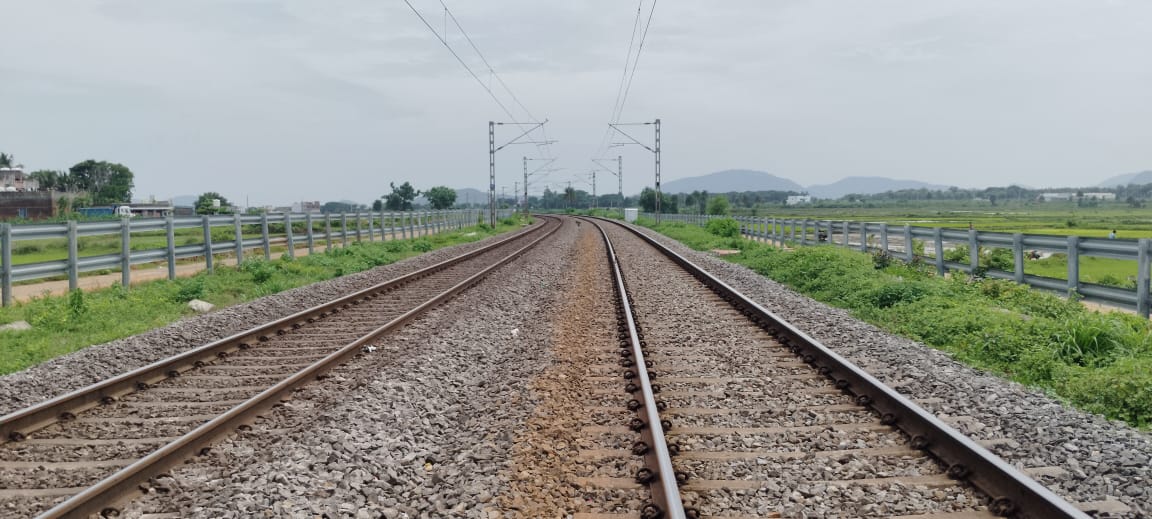
New Delhi: In a significant move to enhance India’s railway infrastructure, the Cabinet Committee on Economic Affairs (CCEA), chaired by Prime Minister Narendra Modi, has approved eight key railway projects with a total estimated cost of ₹24,657 crore. These projects aim to improve connectivity, efficiency, and service reliability across Indian Railways, aligning with the Prime Minister’s vision of a “New India” and the PM-Gati Shakti National Master Plan.
The new line proposals will directly impact 14 districts across seven states—Odisha, Maharashtra, Andhra Pradesh, Jharkhand, Bihar, Telangana, and West Bengal—adding 900 kilometers to the existing railway network. This expansion is expected to provide comprehensive development opportunities, enhancing both employment and self-employment prospects in these regions, thereby contributing to the “Atmanirbhar Bharat” initiative.
One of the major highlights of these projects is the construction of 64 new stations, which will significantly improve connectivity for six aspirational districts—East Singhbhum, Bhadradri Kothagudem, Malkangiri, Kalahandi, Nabarangpur, and Rayagada—covering approximately 510 villages and benefiting around 40 lakh people.
Moreover, the new railway lines will connect key locations, including the UNESCO World Heritage site Ajanta Caves, facilitating increased tourism to this historical landmark.
The projects are strategically designed to support the transportation of essential commodities such as agricultural products, fertilizer, coal, iron ore, steel, cement, bauxite, limestone, aluminum powder, granite, ballast, and containers. The capacity augmentation is expected to handle an additional 143 million tonnes per annum (MTPA) of freight traffic, bolstering India’s logistics efficiency.
Furthermore, the railway projects align with the country’s climate goals by promoting an environmentally friendly and energy-efficient mode of transportation. The enhanced railway network is anticipated to reduce oil imports by approximately 32.20 crore liters and lower CO2 emissions by 0.87 million tonnes, equivalent to planting 3.5 crore trees.
Bhubaneswar: East Coast Railway (ECoR) is expanding its technology-driven security network, with plans to increase…
Bhubaneswar: Odisha’s traditional handloom and handicraft heritage took centre stage at Bhubaneswar Times Fashion Week…
Bhubaneswar: With physical tests for the recruitment of Foresters, Forest Guards and Excise Constables set…
Bhubaneswar: Adapting government communication to the rapidly evolving digital and artificial intelligence (AI) landscape while…
Bhubaneswar: Olympian hockey player and East Coast Railway (ECoR) Sports Officer Amit Rohidas was felicitated…
Bhubaneswar: In a major push to expand egg production and attract investment in the poultry…