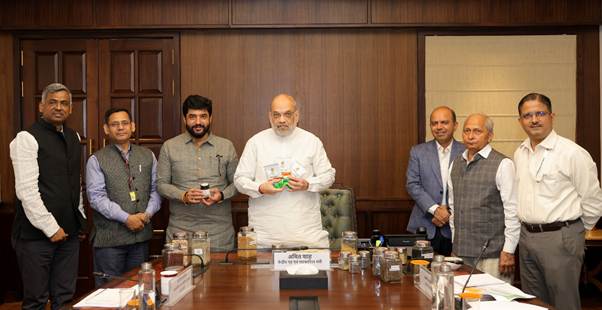
New Delhi: Union Home Minister and Minister of Cooperation, Amit Shah, chaired a crucial review meeting today in New Delhi, focusing on the traditional and sweet seeds of the Bharatiya Beej Sahkari Samiti Limited (BBSSL). During the meeting, Shah reiterated the importance of conserving and promoting traditional seeds, a critical step towards ensuring food security and preserving the agricultural heritage of India.
Amit Shah emphasized the need for the organic production of selected traditional seeds from various regions of the country. He directed that these seeds should be made widely available in the market starting from the Kharif season of 2025. Among the key varieties discussed were Amreli millet from Gujarat, Uttarakhand Gahat (Horse Gram), Uttarakhand Mandua (Finger Millet), Bundelkhand Methi (Fenugreek), Kathia wheat, Munsiyari Rajma, Kala Bhatt, four varieties of Kala Namak paddy, Juhi paddy from Bengal, and Gopal Bhog paddy from Bengal.
These seeds, known for their resilience and nutritional benefits, are an essential part of India’s agricultural landscape. The Union Minister stressed that the promotion of these seeds would not only contribute to sustainable farming practices but also enhance the availability of diverse, indigenous crops for the country’s growing population.
To ensure the long-term conservation of these valuable seeds, Amit Shah called for the creation of a comprehensive database cataloging all traditional seeds of fruits, vegetables, and food grains across India. The database will be instrumental in streamlining efforts for the preservation and promotion of these indigenous varieties.
Furthermore, the Union Minister urged the formulation and implementation of a detailed action plan to guide the conservation and promotion efforts. He emphasized the importance of collaboration between farmers, agricultural institutions, and governmental bodies to protect India’s rich seed biodiversity.
The Bharatiya Beej Sahkari Samiti Limited (BBSSL) continues to play a pivotal role in the efforts to conserve and promote India’s traditional seed varieties. Through its initiatives, the organization is helping farmers transition to organic and sustainable farming practices while preserving the agricultural traditions that have been passed down through generations.
Amit Shah’s review meeting underscored the significance of traditional seed conservation and its potential to shape India’s agricultural future. By prioritizing these indigenous crops, the country can ensure greater food diversity, improve nutritional security, and support the livelihoods of farmers. The government’s continued commitment to the conservation and promotion of traditional seeds will pave the way for a more sustainable and resilient agricultural sector in India.
Bhubaneswar: Bhubaneswar will host two major national-level events on urban development and mobility this week,…
Bhubaneswar/New Delhi: Odisha is finalising a dedicated Agri-PV Policy 2026 to enable farmers to grow…
Bhubaneswar: Odisha has developed a comprehensive protocol for managing pregnancies affected by sickle cell disease,…
New Delhi: President Droupadi Murmu on Wednesday attended the award ceremony of the 65th National…
New Delhi: Union Agriculture and Farmers’ Welfare Minister Shivraj Singh Chouhan has called for developing…
Bhubaneswar: Odisha Chief Secretary Anu Garg has called for expanding livelihood opportunities for rural families…